


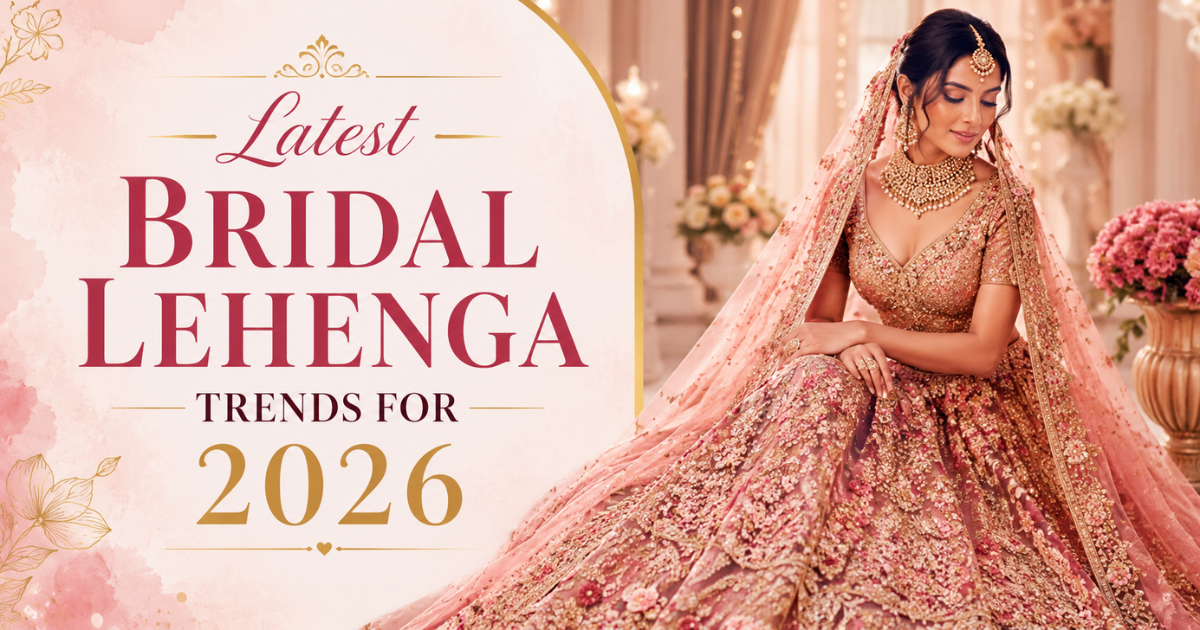
The moment you step onto the mandap, every eye in the room is going to find you first – and in 2026, brides are done playing it safe. This year’s bridal lehenga trends are bolder, richer, and far more personal than the cookie-cutter red-and-gold sets of a decade ago. Think unexpected colour palettes, heirloom-worthy Banarasi weaves, mirror work that catches every camera flash, and silhouettes that move as easily on the dance floor as they do down the aisle.
If you’re currently deep in the wedding-shopping spiral – twenty tabs open, a Pinterest board that’s spiralled out of control, and a growing sense that “traditional red lehenga” isn’t quite you – this guide is for you. We’re breaking down the biggest bridal lehenga trends of 2026, what makes each one work, and how to actually choose a lehenga that photographs beautifully, moves comfortably, and still feels unmistakably like you.
Why Bridal Lehenga Trends Are Shifting in 2026
Weddings today are longer, more photographed, and more personalised than ever. A single-day affair has turned into a multi-event celebration – mehendi, sangeet, haldi, the wedding itself, and the reception – and brides are increasingly choosing pieces that work as hard as they do. That means fabrics that hold up under studio lighting and natural daylight, embroidery that reads well in both close-up reels and wide shots, and silhouettes that let you actually dance without fear of your dupatta unraveling.
The result? 2026 bridal lehenga trends lean into craftsmanship over flash, colour over convention, and comfort without compromising on grandeur.
1. The Banarasi Renaissance
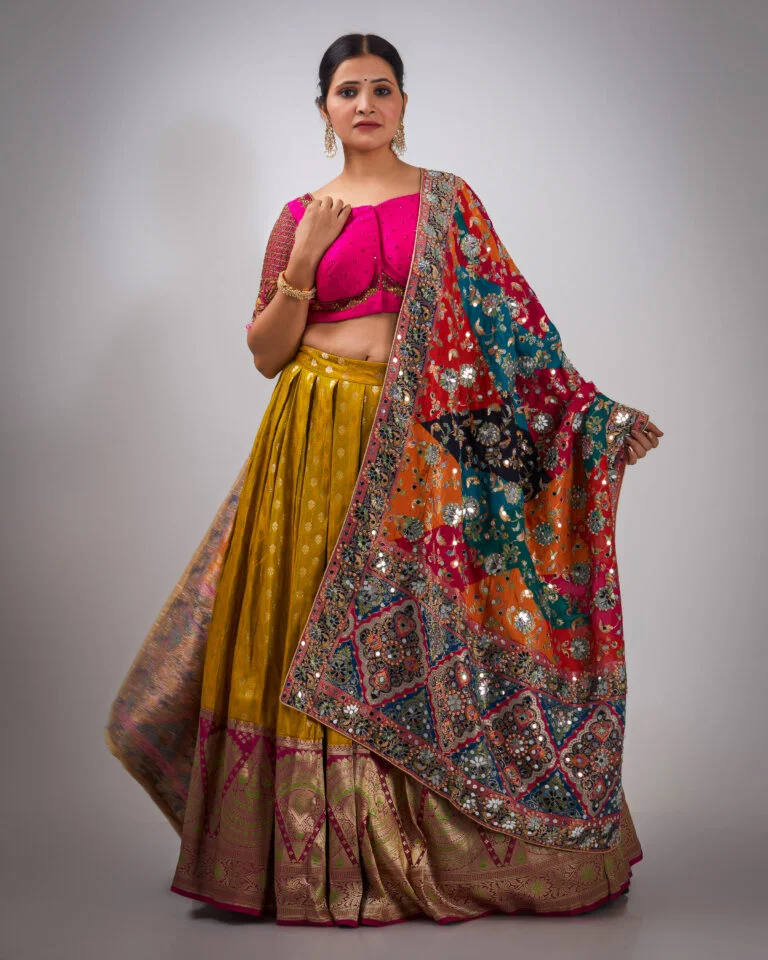
Banarasi weaves are having a full-blown moment in 2026, and it’s not hard to see why. The rich, woven silk carries centuries of craftsmanship in every thread, and unlike heavily embellished fabrics, it photographs beautifully without ever looking over-the-top. Brides are choosing Banarasi for exactly the reason their grandmothers did – it’s timeless, it’s heirloom-worthy, and it never goes out of style.
If you’re drawn to this trend, the Banarsi Lehenge Choli with Mirror Work Dupatta is a strong example of where this trend is heading – traditional Banarasi weaving paired with a mirror-worked dupatta for a set that feels both classic and current. For brides who want the richness of Banarasi silk in a slightly lighter, more wearable format, theGolden Banarsi Lehenga Choli delivers that warm, metallic glow that reads beautifully in both daylight ceremonies and evening receptions. And if you’re leaning away from red or gold entirely, theCoral Banarasi & Embroidered Sleeveless Blouse proves that Banarasi doesn’t have to mean bridal-red – coral is quickly becoming a favourite for brides who want warmth without the expected shade.
2. Mirror Work Is the New Statement Embroidery
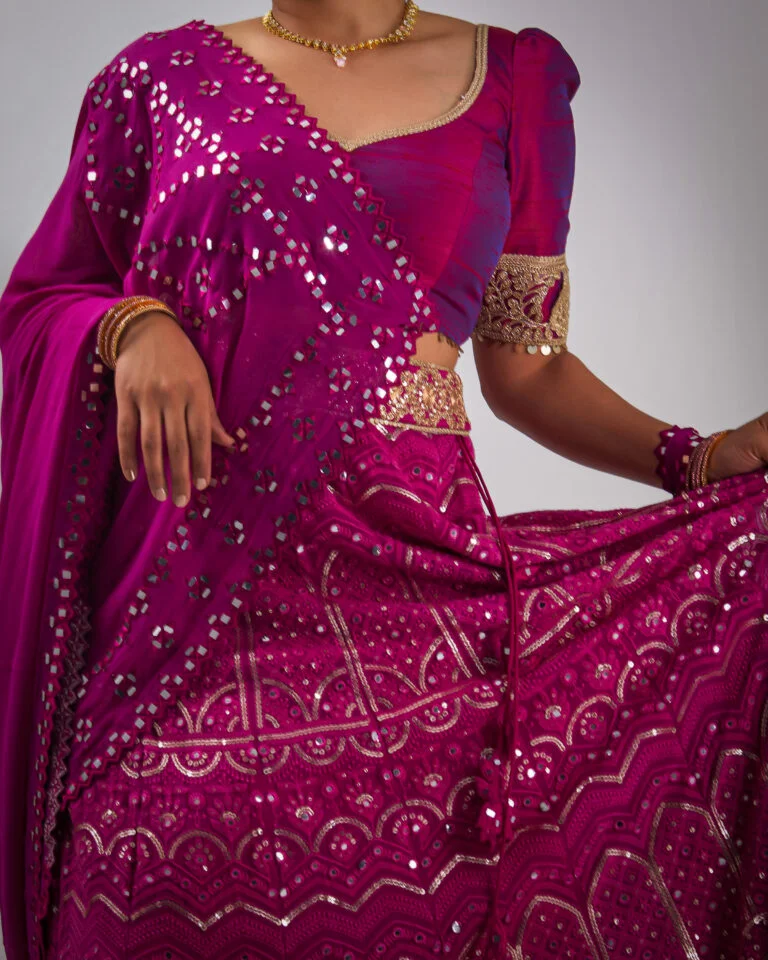
Zardozi and heavy stone work will always have their place, but 2026 is seeing a real shift toward mirror work as the embellishment of choice – especially for sangeet and mehendi functions, and increasingly for the wedding day itself. There’s something about the way mirror work catches and scatters light that feels celebratory in a way that flat embroidery simply doesn’t. It’s also, practically speaking, lighter to wear through a long day of functions.
The Magenta Mirror Work Lehenga captures this trend perfectly – the vivid magenta base combined with intricate mirror detailing creates a lehenga that feels festive without tipping into costume territory. For brides who want a more eclectic, folk-inspired take, the Multicolor Mirror Work Lehenga leans into a joyful mix of colours and craftsmanship that’s especially popular for haldi and mehendi ceremonies, where a brighter, more playful energy fits the occasion.
3. Velvet Takes Over Winter Weddings
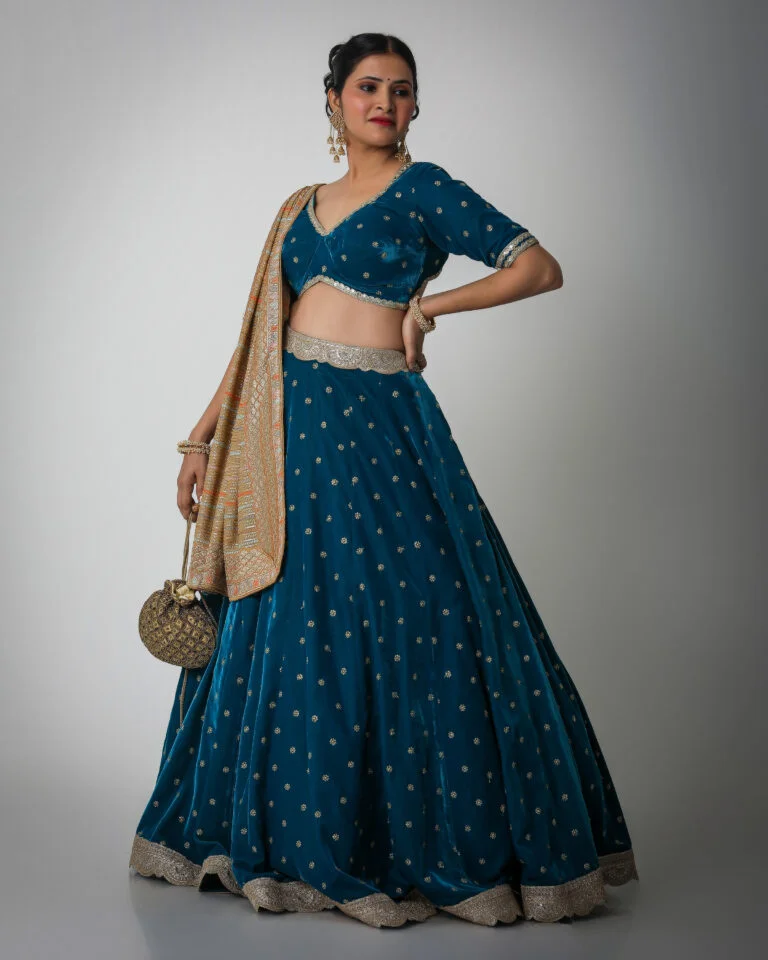
If your wedding date falls between October and February, velvet is the fabric to watch in 2026. It has a plushness and depth that chiffon and georgette simply can’t replicate, and it photographs stunningly under the warm, low lighting typical of winter evening functions. Velvet lehengas also tend to hold embroidery beautifully, giving embellishments a raised, dimensional look.
The Teal Blue Velvet Lehenga is a great illustration of why this trend has taken off – the deep teal shade feels rich and wintry, and velvet’s natural structure means the silhouette holds its shape beautifully through hours of standing, sitting, and dancing. It’s an especially strong choice for winter sangeets or reception functions where you want something that feels a touch more dramatic than daytime wear.
4. Unexpected Colours Are Replacing Bridal Red
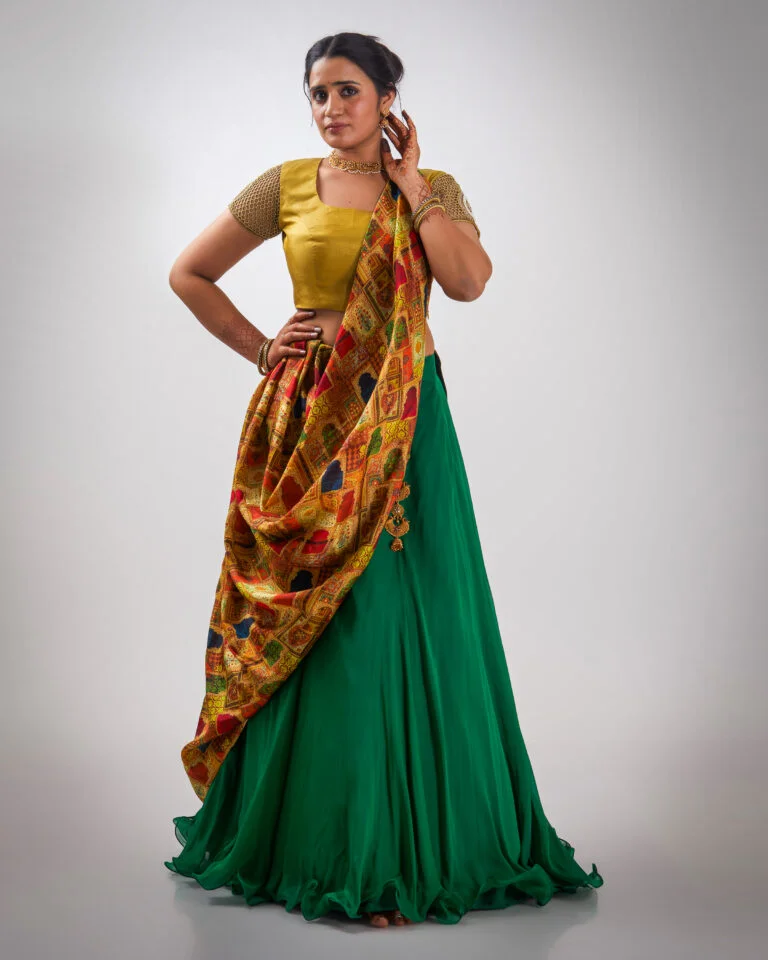
Perhaps the biggest shift in 2026 bridal fashion is colour. Red and maroon are far from disappearing, but brides are increasingly building their trousseau around unconventional shades – emerald greens, mustard yellows, corals, and teals are all having a significant moment, either as the primary wedding lehenga or as standout pieces for pre-wedding functions.
The Emerald Green Chiffon Lehenga is a favourite among brides looking for a lighter, more fluid silhouette for sangeet or cocktail functions – chiffon drapes beautifully and moves with you, making it ideal for a night of dancing. On the more elaborate end of the spectrum, the Mustard Green Floral Embroidered Bridal Lehenga with Pink Net Dupatta shows just how far this colour trend has come – a fully embroidered, bridal-weight piece in mustard green paired with a soft pink net dupatta, built for brides who want to make an unforgettable statement on the actual wedding day without reaching for traditional red.
5. Indo-Western Silhouettes for the Modern Bride
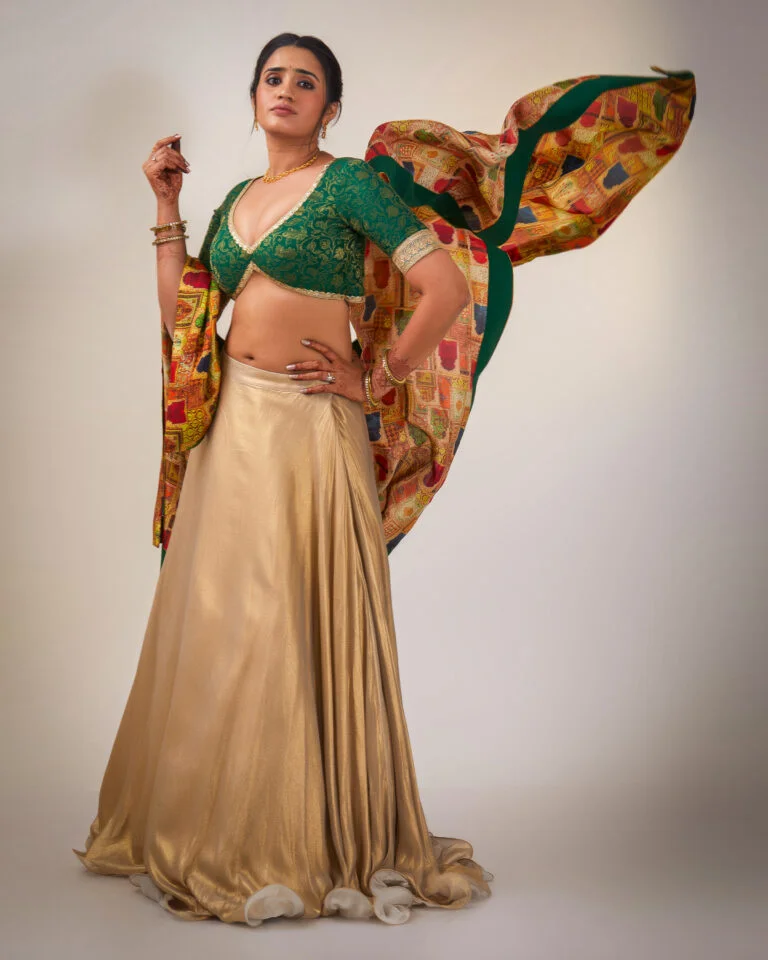
Not every bride wants a traditional lehenga choli for every function, and 2026 is seeing a real rise in Indo-Western bridal wear – think structured capes, statement sleeves, and shimmer fabrics that blend Western tailoring with Indian craftsmanship. These pieces are especially popular for engagement functions, cocktail parties, and receptions, where brides want something that still feels celebratory but breaks from convention.
The Gold Shimmer Indo-Western Lehenga is a strong pick for brides wanting a modern, glamorous alternative to a traditional set – the shimmer fabric catches light beautifully on the dance floor and photographs well under reception lighting. Similarly, the Red Cape Sleeve Lehenga reinterprets bridal red through a distinctly contemporary silhouette, with a structured cape sleeve that adds drama and movement without the weight of a full dupatta drape.
6. Statement Sleeves and Capes Over Traditional Dupattas
Following closely behind the Indo-Western trend is a broader move away from the traditional dupatta altogether. Capes, structured sleeves, and jacket-style blouses are increasingly replacing (or supplementing) the classic drape, particularly for sangeet and reception looks. They photograph dramatically, they’re easier to manage while dancing, and they give a lehenga a distinctly modern silhouette without losing any of its festive weight. If you love the idea of a lehenga but want something a little different from the standard dupatta drape, look for pieces built with cape detailing or statement sleeves as their defining feature.
7. Custom Fit Over Standard Sizing
This isn’t a colour or fabric trend, but it’s arguably the most important shift happening in bridal wear right now: brides are no longer settling for standard sizing. A lehenga is worn for hours – through ceremonies, photographs, and dancing – and an ill-fitted blouse or skirt length can undo even the most beautiful embroidery. Custom stitching, tailored to your exact measurements rather than a generic size chart, has become non-negotiable for brides who want their outfit to feel as good as it looks.
How to Choose Your 2026 Bridal Lehenga
With so many directions to go in, narrowing down your choice comes down to a few practical questions:
- What’s your wedding season? Velvet and richer embroidery suit winter functions, while chiffon and lighter fabrics work better for warmer months or daytime events.
- How many functions are you dressing for? Consider splitting your trousseau – a heavier Banarasi or mirror-worked set for the main ceremony, and a lighter chiffon or Indo-Western piece for sangeet or reception.
- What’s your comfort priority? If you know you’ll be dancing for hours, prioritise fabrics like chiffon or Indo-Western silhouettes over heavier velvet or Banarasi weaves.
- Does the colour suit your skin tone and venue lighting? Jewel tones like emerald and teal tend to photograph beautifully under both daylight and evening lighting, while mustard and coral bring warmth to golden-hour shots.
You can browse the full range of bridal-ready styles in our lehenga for women collection, which spans Banarasi, velvet, mirror work, and Indo-Western pieces across every price point and occasion.
Caring for Your Bridal Lehenga After the Wedding
Once the celebrations wrap up, protecting your investment matters. Always dry clean embroidered, mirror work, or zari-heavy lehengas rather than washing them at home – water can loosen delicate threadwork and dull embroidery over time. Store your lehenga folded in a breathable muslin cloth rather than plastic, and keep it away from direct sunlight and humidity to preserve both the fabric and the embellishments for years to come.
Final Thoughts
2026 bridal lehenga trends are less about following a single formula and more about choosing pieces that reflect who you are as a bride – whether that’s the timeless richness of Banarasi silk, the sparkle of mirror work, the drama of velvet, or the modern edge of an Indo-Western cape lehenga. The good news is that with custom stitching now the standard rather than the exception, you don’t have to choose between tradition and fit. Whatever direction you lean, the most important trend of all is choosing a lehenga that lets you feel completely, unmistakably yourself on your big day.
Frequently Asked Questions
1. What are the biggest bridal lehenga trends for 2026?
The standout trends this year include Banarasi silk lehengas, mirror work embellishments, velvet for winter weddings, unconventional colours like emerald green and mustard yellow, and Indo-Western silhouettes with capes and statement sleeves.
2. Is red still a popular bridal lehenga colour in 2026?
Red remains a classic, timeless choice, but 2026 is seeing many brides move toward alternative shades like mustard green, emerald, and coral for their main wedding look, while reserving bold colours for functions like sangeet and reception.
3. Which fabric is best for a winter wedding lehenga?
Velvet is the top choice for winter weddings in 2026 thanks to its rich texture, structured drape, and the way it photographs beautifully under warm evening lighting.
4. Should I get my bridal lehenga custom stitched?
Yes, custom stitching is strongly recommended for bridal wear. Since you’ll be wearing the outfit for many hours across ceremonies and photographs, a fit tailored to your exact measurements makes a significant difference in comfort and appearance.
5. Can I wear an Indo-Western lehenga for my wedding instead of a traditional set?
Absolutely, Indo-Western lehengas with cape sleeves or shimmer fabrics are increasingly popular for engagement functions, cocktail parties, and receptions, offering a modern alternative to a traditional lehenga choli while still keeping the festive weight of bridal wear.
I just could not leave your web site before suggesting that I really enjoyed the standard information a person supply to your visitors Is gonna be again steadily in order to check up on new posts