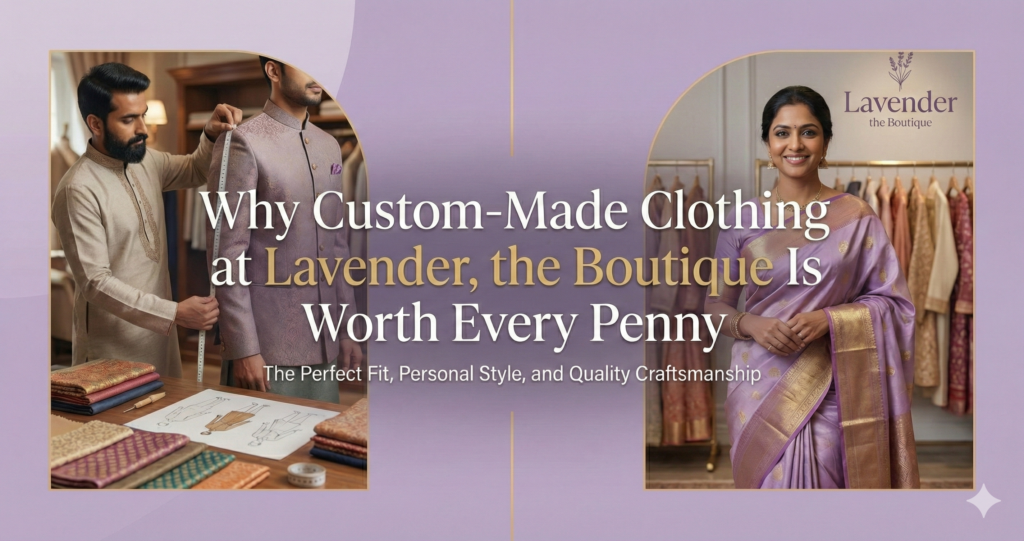
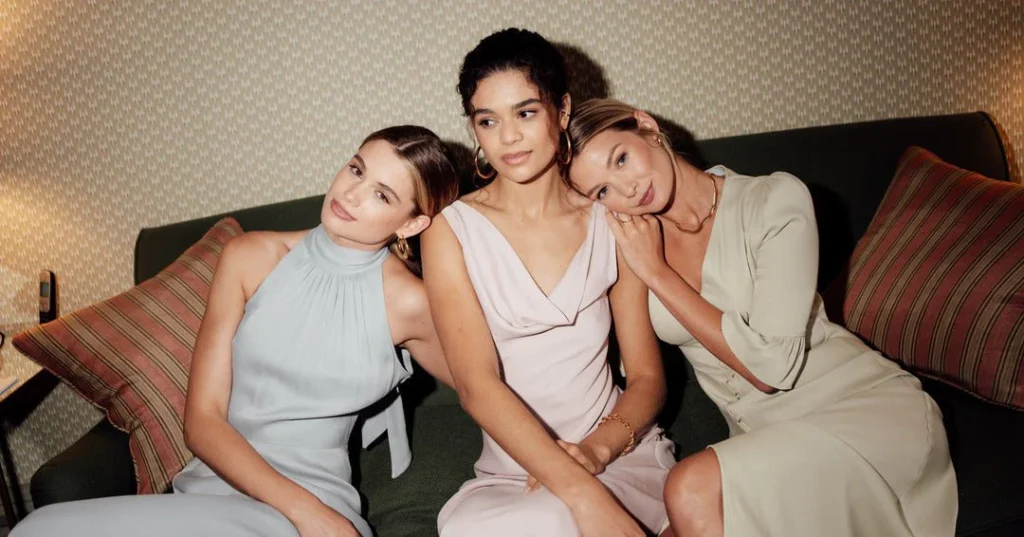
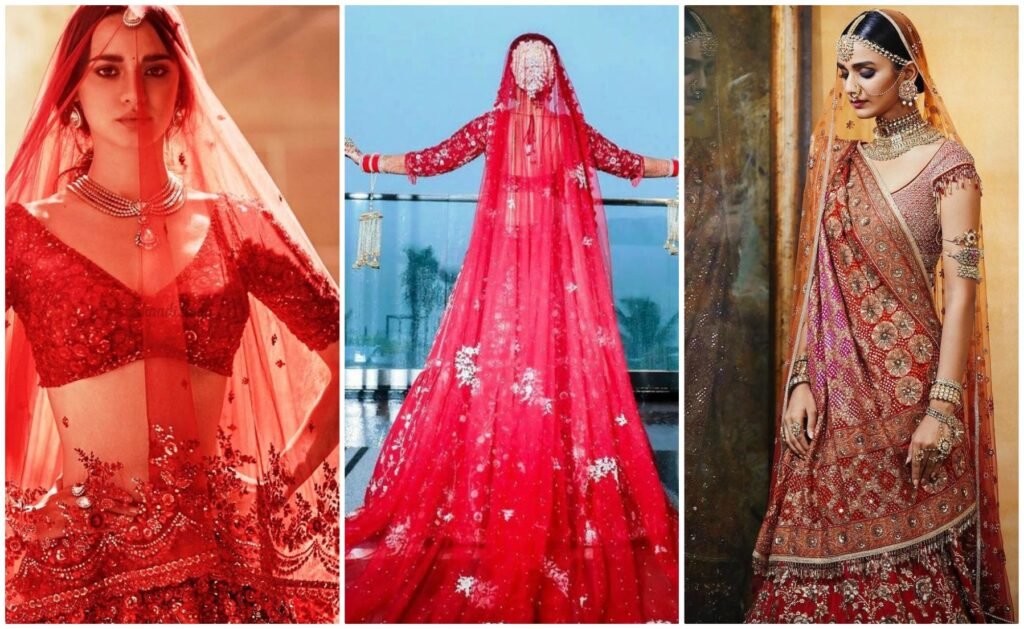
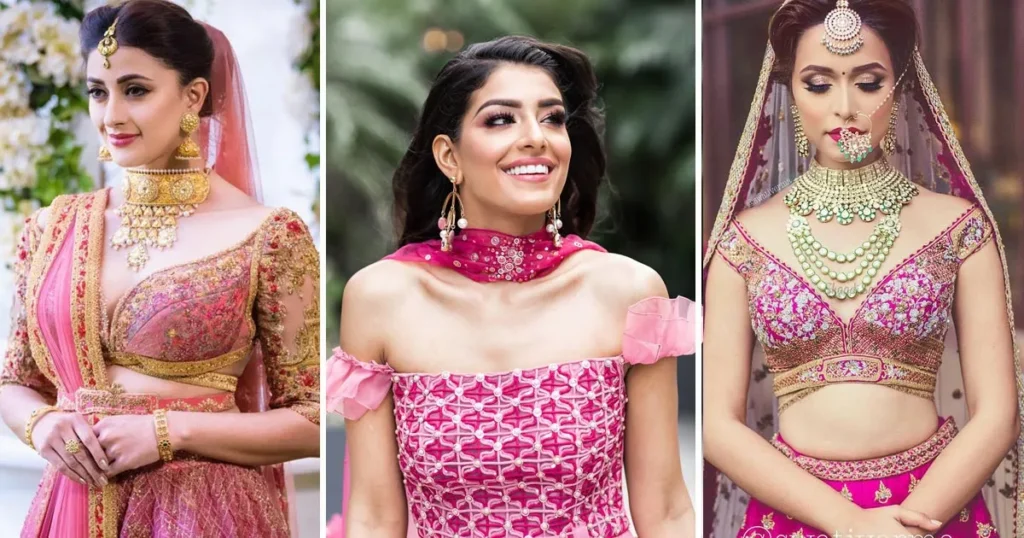
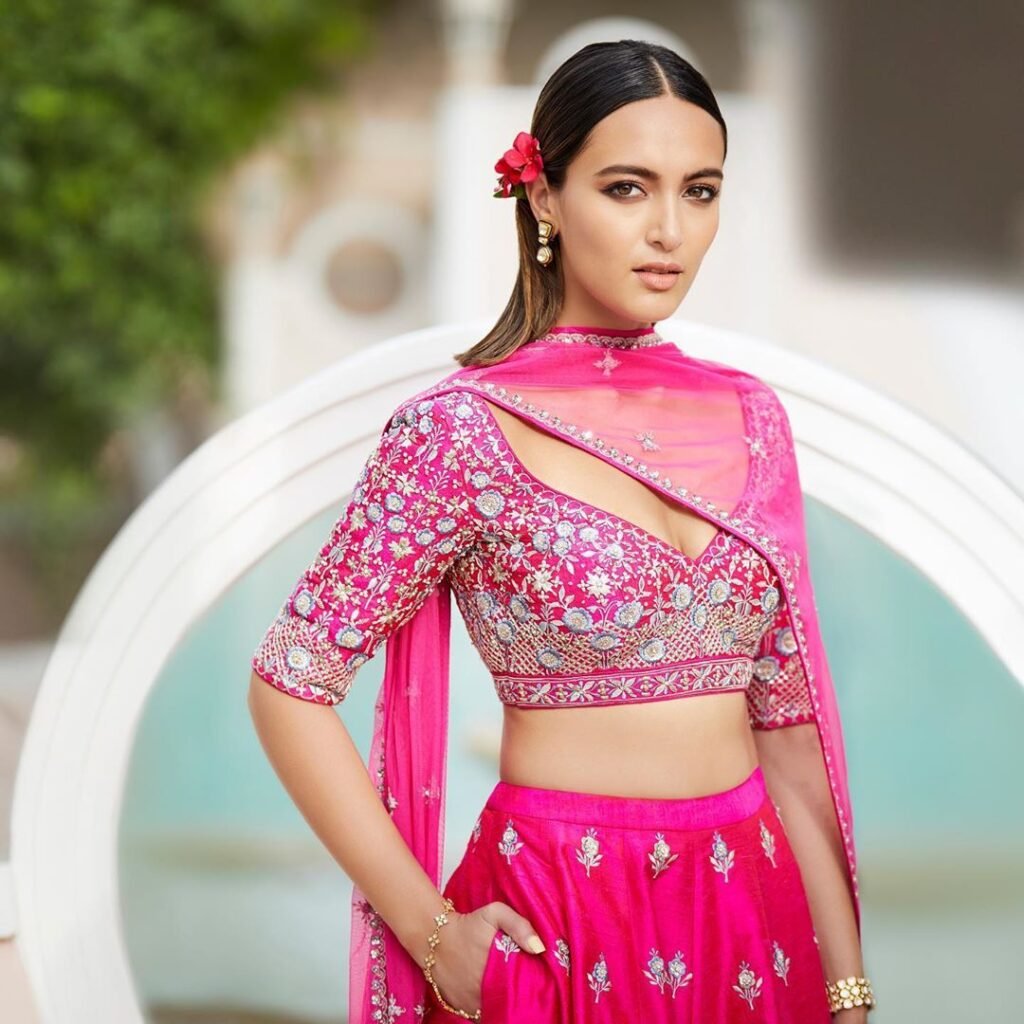
When you step into Lavender, the Boutique, you’re not just shopping for clothes—you’re investing in a wardrobe that celebrates your unique style and body. While ready-made fashion has its place, custom-made clothing offers advantages that transform how you look, feel, and express yourself.
The Perfect Fit: Designed for Your Body Alone
At Lavender, we understand that every body is beautifully different. Mass-produced clothing follows standardized size charts that rarely account for individual proportions. Custom tailoring changes everything.
Your garments are crafted to your exact measurements, considering not just your dimensions but also your posture and body shape. The result? Clothing that fits perfectly at the shoulders, drapes elegantly at the waist, and sits just right at the hem—no awkward pulling, bunching, or alterations needed.
Express Your Personal Style
Custom clothing puts creativity in your hands. At Lavender, you’re not limited to what’s on the rack. Choose from premium fabrics ranging from breathable cottons and luxurious silks to structured wools. Select colors that complement your skin tone, patterns that reflect your personality, and details that make each piece uniquely yours.
Whether you prefer classic elegance, modern minimalism, or bold statements, our custom tailoring service brings your vision to life. From collar styles and button placements to pocket designs and lining colors, every element is crafted according to your preferences.
Superior Quality and Craftsmanship
The difference between custom-made and off-the-rack clothing becomes clear the moment you examine the construction. At Lavender, each garment receives meticulous attention from skilled artisans who take pride in their craft.
Custom pieces feature reinforced seams, quality stitching, and finishing details that mass production simply cannot match. French seams provide durability and a polished interior, while stress-point reinforcements ensure your garments withstand daily wear. This level of craftsmanship means your investment lasts for years, not seasons.
Unmatched Comfort
Comfort isn’t a luxury; it’s essential. Custom clothing from Lavender addresses your specific needs and preferences. Need extra room in the shoulders for movement? Prefer a higher or lower neckline? Want fabrics suited to your climate?
We guide you through fabric selection based on your lifestyle, helping you choose materials that breathe, move, and feel comfortable against your skin. The result is clothing you’ll actually want to wear, day after day.
A Sustainable Fashion Choice
In an era of fast fashion and environmental awareness, custom tailoring aligns with sustainable living. Made-to-order clothing reduces waste, as fabrics are cut precisely without excess. The durability of custom garments means fewer replacements and less contribution to landfills.
At Lavender, we’re committed to ethical practices, from sourcing quality materials to supporting skilled craftsmanship. When you choose custom clothing, you’re supporting a model that values quality over quantity and craftsmanship over mass production.
Investment Value That Makes Sense
While custom clothing requires a higher initial investment, consider the long-term value. A well-made custom suit or dress serves you for years, maintaining its shape, color, and appeal through countless wearings. You’ll spend less on alterations, replacements, and pieces that never quite work.
Custom garments offer versatility; one quality piece can be styled multiple ways for various occasions. The timeless appeal of well-tailored clothing means your wardrobe remains relevant regardless of fleeting trends.
When to Choose Custom at Lavender
Special Occasions: Weddings, celebrations, and important events deserve clothing that makes you feel confident and comfortable.
Professional Wardrobes: Project authority and polish with suits and separates that fit impeccably.
Lifestyle Changes: Whether you’ve experienced weight fluctuations or simply want clothing that adapts to your needs.
Wardrobe Foundations: Build a collection of versatile pieces that truly reflect your style.
Visit Lavender, The Boutique
Experience the difference that custom-made clothing makes. At Lavender, we combine expert craftsmanship with personal service to create garments that fit your body, suit your lifestyle, and express your individual style.
Ready to invest in quality, comfort, and clothing that’s uniquely yours? Visit Lavender boutique today and discover why custom tailoring isn’t a luxury—it’s the smartest decision you’ll make for your wardrobe.
Book your consultation at Lavender, the Boutique, and experience the art of perfect fit.
While careful selection of every design element of a gown, be it the silhouette, the fabric, or the sleeve style <link_to_other_articles>, is important, it is the right neckline that will frame your face and accentuate your bust area in the most flattering manner. The front and back necklines of gowns need to be chosen as per the wearer’s body type because the neckline is what determines whether your closeup pictures will be a hit or a miss.
The ideal neckline is one that highlights your best features, such as a sharp collar bone or majestic shoulders, and masks your problem areas, which could be heavier arms or a long neck. Not only can the right neckline help you flaunt your favourite features, it can also be a reflection of your personal style. Simply switching the neckline of a gown from one style to another can change the entire mood of the outfit and can make it more formal, modern, or flamboyant. Therefore, having some basic knowledge about different necklines will allow you to work better with your designer to come up with the most suitable design as per your body type, style, and the occasion. Here is an overview of the most common gown necklines along with the body types they complement the most.
The A-Z of Gown Necklines
1. Asymmetrical/One-Shoulder
An asymmetrical or one-shoulder neckline consists of a single strap that lies on either the left or the right shoulder and is draped diagonally across the chest. This modern and glamorous neckline highlights the collarbone beautifully and is perfect for pear-shaped body types because it draws attention to the shoulders and away from the wider hip area.
2. Halter Neck
A halter neckline features straps that go around the neck with a tie, hook, or snap closure at the back. This neckline is perfect for those who wish to flaunt their broad shoulders and works particularly well for taller women. It is also ideal for those with a heavier bust area because it draws the attention away from the bust and towards the shoulders.
3. High Neck
A high neckline is similar to a turtleneck and is ideal for those with a thin neck and a smaller bust size. It adds a hint of sophistication to the gown and is the neckline of choice for a more modest look. However, this neckline can also be glammed up by placing illusion netting around the bust area.
4. Illusion Neck
An illusion neckline makes use of sheer fabric in the upper region of the bodice to give the illusion of a strapless neckline but with more coverage. This neckline is a good choice for those who want the gown to highlight their bust area but don’t want to show too much skin. The use of sheer netting and lace adds a delicate and feminine look to the gown.
5. Jewel Neckline
A jewel neckline is essentially a round neckline that sits above the collarbone and is often studded with gemstones to resemble a necklace. This neckline accentuates the neck beautifully and gives the appearance of a fuller bust area. It is an elegant neckline that is perfect for evening gowns, especially for those with a smaller bosom.
6. Off-shoulder
An off-shoulder neckline consists of straps that rest on the arms, below the shoulders. This neckline is ideal for flaunting a sharp collarbone. It works well for fuller-busted women because it creates a balance between the bust and the exposed shoulders. This style may not be suitable for those with wide shoulders or fuller arms.
7. Queen Anne Neckline
The Queen Anne neckline typically features a higher collar at the back and a deep sweetheart or scoop neck in the front. This neckline is suitable for those with narrow shoulders as it creates the illusion of a broader upper bust area while accentuating the collar bones. It is a popular neckline for modern wedding gowns.
8. Scoop Neck
The scoop neckline is a deep and round neckline that flatters most body types. It is particularly suitable for those with a shorter neck because it draws the attention downwards and creates the illusion of a longer neck. It also flaunts a hint of the collarbones and looks modern yet elegant on wedding dresses and party wear gowns.
9. Square Neck
A square neckline has a horizontal bodice which is perpendicular to the straps, creating a rectangular shape between the bust and the neck. This neckline elongates the neck and gives the illusion of narrower shoulders. It also works well for those with a round face because it draws attention vertically downwards, making the face look longer.
10. Straight Across Neckline
A straight-across neckline is a strapless neckline that runs straight across the chest. It imparts a clean and sophisticated look to the gown and is ideal for those who wish to show off their neck. This neckline is perfect for those who wish to pair the gown with a statement necklace.
11. Sweetheart Neck
A sweetheart neckline has a bodice that dips in the center to resemble the curves of a heart. This neckline is often strapless but can also be paired with slender straps. It works well for those with a heavier bust area by accentuating their curves in a flattering manner.
12. V-Neck
A V-neckline is one that dips into a V-shape in the front. This neckline suits most body types, creates the illusion of height and has a slimming effect. It has a narrowing effect on wider shoulders and can also make the bosom area appear fuller. The flattering nature of this neckline makes it a safe option for bridal and engagement gowns.
This list covers some of the most commonly used necklines for gowns. For a more comprehensive list of all possible necklines, you can refer to this article.
Choosing the Most Flattering Back Necklines
The back neckline is just as important as the front neckline of the gown. It helps create a balance between the front and the back of the garment and brings the design of the gown together. Similar to the front necklines, you can choose the back of the gown to look as conservative, modern, or bohemian as you want. You can either match the back neckline to the front neckline, for example, a V-neckline on both sides, or can opt for a statement back style. The perfect back neckline for a gown can be determined by the wearer’s body type as well as the occasion and the dress code. Here is an overview of some of the most popular back necklines and their unique features.
1. Plunging Back
As the name suggests, a plunging back neckline plunges deep at the back, adding oodles of glamour to the outfit. This back style is suitable for those who don’t mind showing some skin and have a narrow back or an hourglass figure. A plunging back neckline pairs well with clean front necklines such as halter, V-neck or square, to create a modern and crisp look.
2. Keyhole Back
The keyhole back brings the best of both worlds to the table by allowing the wearer to show off some skin while covering up other parts of the back. It essentially covers the upper and lower back with a gape in the middle that can be of different shapes such as a circle or a diamond. This back style accentuates the bone structure and creates a slimming effect on those with a wider back.
3. Illusion Back
An illusion back essentially consists of a sheer netting or lace that covers the back. It is perfect for those who want to flaunt their back but in a more conservative and minimalistic manner. When paired with a high neck, scoop or jewel front neckline, this back style can look extremely sophisticated yet delicate. It complements everything from bridal gowns to flowy gowns for daytime events, depending on the choice of the sheer fabric.
While these are some of the most popular back designs, numerous other combinations of front and back necklines are possible. Here is an article on statement back details for more inspiration.
With our comprehensive neckline guide, terms such as Queen Anne and Sweetheart Neckline won’t seem like jargon anymore! Once you are well-versed with the different necklines, you can also refer to the following links to find out which hairstyles and necklaces pair well with what necklines.
Now that you have a good idea of what front and back necklines work well for what body types and occasions, consult your designer regarding the latest trends to choose a fashionable and flattering neckline for the gown of your dreams.
Do you have a dream design for a stunning gown in mind which you wish to bring to life? Translating what you have envisioned into a gorgeous gown will require a number of steps. Choosing the right silhouette or shape for your gown is just one part of the design process, careful selection of the perfect fabric and colour is what will ensure that the gown holds the desired shape well and is suitable for the occasion at hand. Be it wedding gowns or party wear gowns, here are some tips on how to pick the perfect fabric and colour to complement the gown style and make you look your very best for the event.
Commonly Used Gown Fabrics and the Gown Styles they Pair Well With
Fabric selection is a crucial step of the gown making process because different fabrics will impart a different look and fall to the same gown. Some fabrics have a glossy sheen to them while others do not impart any lustre to the gown. Similarly, some fabrics are stiff and structured whereas others are soft and flowy, thereby making them more suitable for specific silhouettes. A combination of fabrics can also be used in the construction of the gown, wherein a stiffer fabric is used to impart the desired shape to the gown and a softer fabric is used as an overlay, to impart a delicate finish to the outfit.
Once you have selected the silhouette for your gown as per the occasion and your body type <link_to_first_article>, you can choose the fabric that is most suitable for that silhouette accordingly. Here is an overview of the properties of different fabrics to help you make the right choice as per the look you are planning to achieve.
Structured Fabrics
1. Satin
Satin is a structured fabric with aglossy finish that adds movement to the gown. It is a popular choice for both bridal gowns as well as party wear gowns for formal events because of its lustre. This fabric pairs well with an A-line or ball gown silhouette and is more suitable for cooler weather because it is quite heavy.
2. Crepe
A fabric that can be shaped with ease, Crepe is known for its crinkled, matte finish and flowy nature. French Crepe is often used in evening gowns because it holds its shape well despite being light-weight. This fabric adds an elegant, feminine touch to the garment and is extremely comfortable to wear.
3. Charmeuse
Charmeuse is a light-weight fabric with a rich sheen that adds a hint of glamour to the outfit. This fabric looks similar to satin and can be used for making elegant mermaid and trumpet gowns. Thanks to the beautiful fall and marvelous shine of the fabric, it is an ideal candidate for formal events and is often used in bridesmaids gowns.
4. Velvet
Velvet is a strong fabric that imparts a rich sheen to the outfit, making it the perfect choice for Indian evening gowns. It provides an elegant drape to the gown and is ideal for mermaid and sheath silhouettes because it hugs the body in a flattering manner. If you plan to look regal for an upcoming event then velvet should be the fabric of choice for you.
5. Brocade
Brocade is a stiff fabric with a jacquard weave which can be identified by the raised design on the fabric. This fabric has an elegant and rich finish and is perfect for Indian wedding gowns, especially for the colder months. Brocade is often used to impart structure and stiffness to fuller skirts.
Soft Fabrics
1. Chiffon
Chiffon is a light-weight, sheer fabric without a sheen. It is easy to move around in and is perfect for daytime events. This fabric pairs well with a flowy A-line silhouette and is an ideal candidate for summer wedding dresses. If a soft, feminine look is what you have in mind then this is the right fabric for you.
2. Lace/Net Fabric
Lace is often used as an overlay in wedding gowns to add a vintage and feminine feel to the outfit. Sheer netting and lace are also used to create illusion necklines and sleeves. Lace comes in different weaves, such as Chantilly and Eyelet, and each weave imparts a different look to the garment.
3. Organza
Organza is a fine fabric which looks similar to chiffon but has a slight sheen. It is also stiffer than chiffon and is often used to add volume to ball gowns. This fabric comes in handy for creating fuller skirts, gown trains, as well as wedding veils.
Other Fabrics
1. Georgette
Georgette is a sheer and flowy fabric with a crinkly texture and no sheen. It is used for creating wedding dress overlays and floaty evening gowns. This fabric has a bouncy nature which imparts a fun but feminine look to the outfit but its matte finish makes it less suitable for party wear gowns.
2. Taffeta
Taffeta is a smooth and crisp fabric with a slight lustre, which looks similar to satin but is lighter. This fabric is sometimes used for imparting structure to ball gowns and fuller skirts. Its iridescent finish imparts a nice sheen to the outfit.
3. Tulle
Tulle is an airy, gauzy material that is often used in gown linings to impart a fuller appearance to the skirt. It is a beautiful and delicate fabric that is ideal for wedding veils as well as poofy ball gowns. Tulle is, therefore, mostly used in prom dresses as well as Christian wedding gowns.
Choosing the Perfect Colour for your Gown
While the fabric of the gown largely determines its structure and finish, the colour is what transforms the mood of the outfit. Different colours look better during different times of the day and pair better with different skin tones. You will need to select a colour for your gown that looks flattering on you and is also appropriate for the occasion. Here are some factors that you must consider to choose the perfect colour for your gown.
1. Time of Day
While gowns can be worn for both evening and daytime occasions, you must choose an appropriate colour as per the timing of the event. Lighter hues and softer colours look beautiful during the day whereas deeper and darker colours are more suitable for the evening. Even if you have a specific colour family of choice, you can opt for different shades for a day or night look respectively. For example, if you want to wear green then opt for a light, minty green for the day or a rich, emerald green for the night.
2. Season
Another factor that you must consider is the weather. Soft pastels and bright neons are perfect for the summer but do not go well with grey or gloomy weather. For an event in the rainy season, opt for blues, purples, and greys. Deep brown, mustard yellow, and maroon are foolproof autumn colours whereas jewel tones such as a rich ruby or a deep amethyst purple work great for winters. Consult your designer to select the most weather-appropriate colours as per the time of the year and the latest trends.
3. Occasion
Different gowns in the same fabric can look formal, glamorous, or festive depending upon the choice of colour. As an example, a black velvet gown is perfect for a formal event, while a red velvet gown with golden embellishments works well for festive occasions. Here are some colour recommendations for gowns as per different occasions.
3a) Wedding Gowns
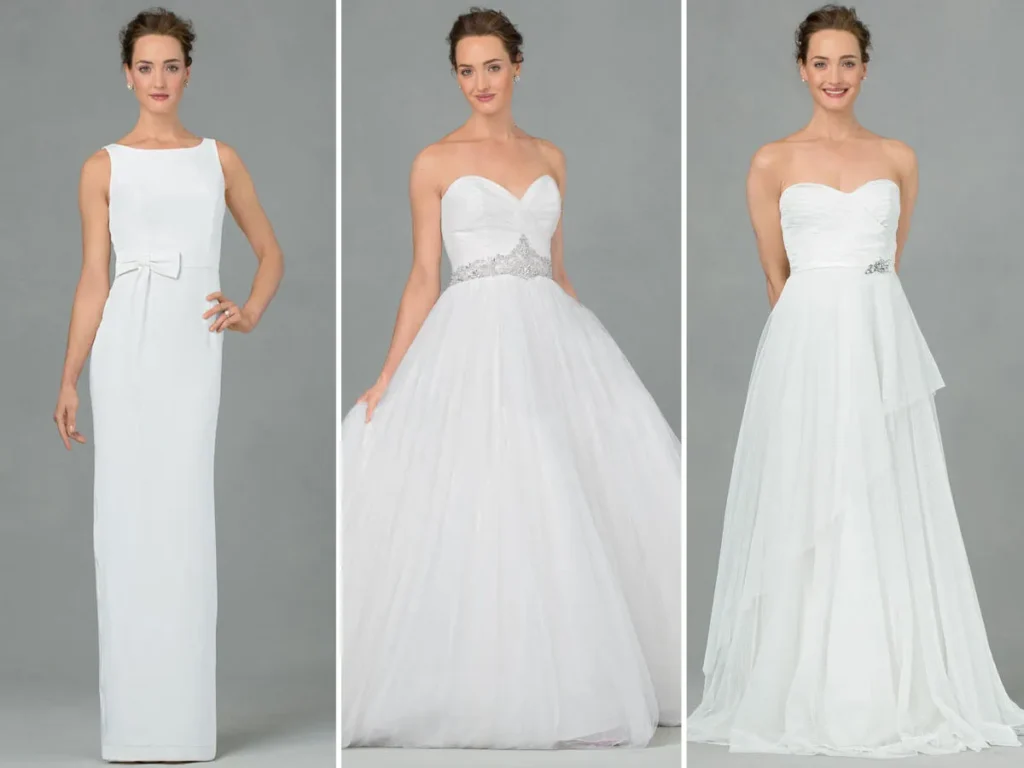
While Christian wedding gowns are traditionally white, you can also opt for muted golden, blush or blue undertones in the gown for a slightly different take on the conventional look. You can also refer to this article by The Knot for more unconventional wedding gown ideas. <link- https://www.theknot.com/content/nontraditional-wedding-dress-ideas>
3b) Wedding Reception Gowns/Engagement Gowns
Both wedding reception gowns and engagement gowns allow you to experiment with jewel tones and festive colours. You can opt for shades of pink, blue or green for these occasions depending upon the time of day and season.
3c) Bridesmaid Gowns
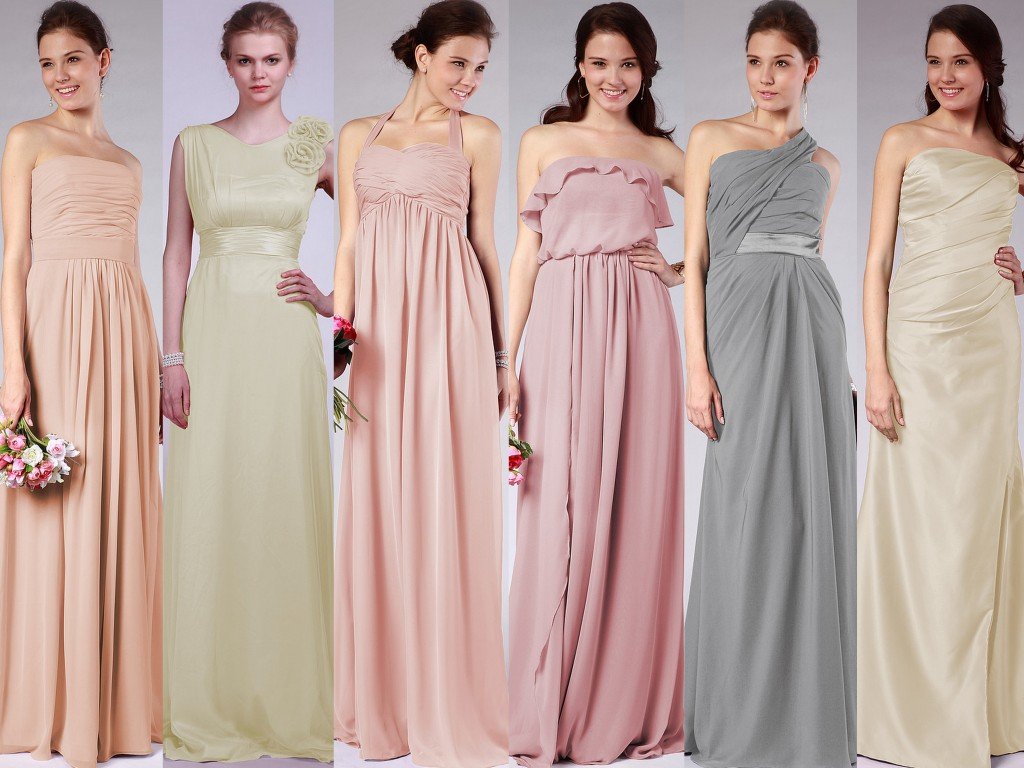
The colour of bridesmaid gowns can be coordinated with your wedding theme colours or can be a deeper colour in the same family as your wedding gown. You can also opt for mismatched bridesmaid gowns wherein the gowns are in different colours belonging to the same or complementary colour families.
3d) Party Gowns
Colourful and embellished gowns are the right pick for parties and festivals. You can choose the colour family as per the festive occasion, for example, red for Christmas, golden for New Year’s Eve, and pastels for Easter.
3e) Prom Gowns
When it comes to choosing a colour for your prom dress, you can either pick a bright and youthful colour that resonates with your personality, such as fuchsia or peacock blue, or can opt for an elegant and timeless colour, such as black or royal blue.
4. Embellishments
Embellishments and embroidery in the same colour as that of the fabric looks sophisticated while elevating the look of the outfit. On the other hand, 3D embroidery, patch-work or applique work in contrasting colours to the fabric provide a bolder finish for a statement outfit. You can opt for embellishments in the same colour family as your gown’s fabric for a more conservative look and in contrasting or shimmery shades for festive occasions.
5. Skin Tone
You would want the colour of your gown to complement your features and skin tone to the tee. Therefore, ask your designer what colours would look best on your skin tone to make the perfect choice. If the veins on your forearm look greenish, you have warmer undertones to your skin and will look best in warm-toned colours such as red, mustard, and orange. On the other hand, if the veins on your forearm are bluish or purplish then your skin has cooler undertones and cool-toned shades such as aqua, pink, and mauve will suit you more. You can refer to this article by Instyle Magazine to find out your skin tone and the colours that will complement you the most. <link: https://www.instyle.com/how-tos/how-to-find-best-color-to-wear-for-your-skin-tone>
6. Body Type
Different body types have different star features and problem areas. Choose brighter colours for the areas that you wish to highlight as per your body type and darker colours for the areas from which you wish to divert the attention. Colour blocking is a great way to create the illusion of a curvier or slimmer figure. This will allow you to flaunt your best assets and will make you feel more confident in the gown.
When it comes to choosing the right fabric and colour for a gown, the innumerable options can be quite overwhelming. However, if you have a clear vision of the desired look, you can easily narrow down your choices based on the factors described above. So keep these tips handy while finalizing your gown’s material and hue to end up with a phenomenal outfit.
Gowns are extremely versatile items of clothing and are a popular outfit choice for special occasions of all kinds. When selecting the perfect design for a gown, a lot of elements need to be considered, such as the fabric, colour, neckline, train length, and sleeve style <link_to_other_articles>. However, one of the most important design elements of a gown is the silhouette, because the right silhouette will ensure that the gown flatters your body type and highlights your best features. In this article, we will take you through all the essential steps that you should follow to select the perfect gown silhouette for your body type as per the occasion at hand.
The Significance of Gown Silhouettes
In design terminology, silhouette refers to the overall shape of the garment, which comes in different variations to flatter different body types as well as to suit the dress code of different events. A clever choice of gown silhouette can allow you to mask your problem areas and can make you appear slimmer or taller, as the need may be. The wrong gown silhouette, on the other hand, can drown your frame in fabric or draw attention to your problem areas. Therefore, one of the first steps towards making the right silhouette choice for your frame is to identify your body type.
Determining Your Body Type
Understanding your body shape will allow you to identify your best features, and you can then select a gown silhouette which showcases these features while drawing attention away from the other areas. To determine your body type, first measure your shoulders, bust, waist, and hips using a tape measure. You can refer to this article by WhoWhatWear to make sure that you are measuring yourself correctly. Once you have noted down these measurements, you can easily identify your body type using the following classification.
1. Inverted Triangle
Your bust or shoulder measurement is >5% bigger than your hip measurement.
2. Rectangle
Your hips, bust, and shoulders are almost the same size without a defined waistline i.e. your waist is <25% smaller than your shoulders or bust, and your hip, bust, and shoulder measurements have <5% variation from each other.
3. Triangle or Pear
Your hips are at least 5% wider than your bust or shoulders.
4. Hourglass
Your shoulders and hips are almost the same size with a well-defined waistline i.e. your waist measurement is more than 25% smaller than your shoulder or hip measurement and your shoulder and hip measurements are within 5% of each other.
5. Round
Your waist and bust measurements are >5% bigger than your hip measurement.
Different Gown Silhouettes and the Body Types They Flatter the Most
Once you have identified your body type, you can refer to the following list of silhouettes to find out which silhouettes will flatter your body the most.
1. A-line Silhouette
An A-line silhouette consists of a fitted bodice with a skirt that flares out from the waist, to create an A-shape. This flattering silhouette complements most body types but is particularly suitable for triangle or pear body types because the flare creates a balance between the hips and shoulders, diverting attention away from the wider hips and towards the shoulders.
2. Sheath Silhouette
A Sheath silhouette is a figure-hugging silhouette that follows the body’s natural shape. It is appropriate for those with an hourglass figure who want the gown to showcase their curves. This silhouette is also suitable for those with a slim rectangular body type because it will impart a curvier appearance to your straight frame.
3. Ball Gown Silhouette
A Ball Gown silhouette consists of a fitted bodice with a full skirt. It is a classic silhouette that suits most body types and gives the appearance of a slimmer waist. This silhouette cinches the waist and is therefore suitable for round body types who have a wider waist region. However, those with a petite frame (who are shorter than 5 feet 3 inches) should avoid this silhouette because the poofy skirt can drown your frame and make you look shorter.
4. Mermaid/Trumpet Silhouette
A Mermaid silhouette hugs the contours of the body till the knees and then flares out to create a beautiful fishtail effect. This silhouette is ideal for those with an hourglass figure who wish to show off their curves. Those who are looking for a softer silhouette can opt for a trumpet silhouette instead, which is similar to the mermaid variant but flares out slightly above the knees. The mermaid and trumpet silhouettes are also suitable for those with an inverted triangle body shape because the fit-and-flare design draws the attention away from the broad shoulders and towards the hip region.
Choosing the Right Gown Silhouette As Per the Occasion
Now that you know which gown silhouettes will suit your body type the best, you can choose from the same based on the occasion to which you plan to wear the gown. Different gown silhouettes suit different occasions and dress codes, and by choosing the appropriate gown silhouette, you can create a formal, semi-formal, or casual look respectively.
1. Black-Tie/Formal Events
A ball gown silhouette is synonymous with a classic ensemble for formal black-tie events. However, if you are looking for a slightly more modern outfit then a mermaid gown in a thicker fabric might be worth considering. Evening gowns for black tie events should be well-tailored and the design shouldn’t be too over the top. You can ask your boutique designer to suggest you appropriate necklines and fabrics that pair well with the silhouette and adhere to the dress code.
2. Parties/Semi-Formal Events
As per the timing and occasion behind the party, you can opt for a silhouette that is comfortable yet elegant. If it is a sit-down event then a mermaid style gown or a ball gown will be a stunning choice, but for a more casual party where you will be walking around, an A-line gown or a trumpet gown might be more practical. If you are going to be dancing at the party then make sure to test the gown for ease of movement during the fitting sessions.
3. Weddings/Festive Occasions
If you are a bride to be then you can opt for an embellished A-line gown or mermaid gown for your wedding reception and cocktail party, as an alternative to traditional Indian wear. You can also take a cue from classic Christian wedding gowns and opt for a ball gown silhouette. This would look particularly spectacular for the Sangeet function when the spotlight will be on you at the dancefloor. Wedding guests can choose lightly embellished A-line gowns or trumpet gowns that look festive and are comfortable too. As a guest, you wouldn’t want to outshine the bride, so opt for lighter fabrics and non-bridal colours.
4. Casual to Semi-Formal Daytime events
Wearing a gown to a daytime event can be tricky, but with the right choice of silhouette and fabric, you can rock a gown even to a brunch party. Opt for a sheath silhouette with a slit or a trumpet silhouette to feel comfortable while looking chic at a semi-formal daytime event. For a more casual setting, opt for a breezy A-line silhouette to glide across the venue with ease.
Following these simple tips will allow you to determine the best gown silhouette for any occasion as per your body type. Do not get bogged down by the plethora of unfamiliar design terms and the sheer variety of gown styles on offer in Bangalore. Go about selecting your gown design in a systematic manner as explained above and expand your gown collection with zero inhibitions!
In fashion terminology, separates are outer garments that cover only certain parts of the body and therefore need to be paired with other separates to create a full outfit. In terms of ethnic wear, separates comprise of dupattas, belts, jackets, and capes, to name a few. Impeccable styling is what transforms separate pieces of clothing into a complete outfit, and styling your lehenga with the right dupatta, belt or jacket is what will set it apart. When it comes to choosing the separates to go with your bridal or party wear lehenga, you have to marry creativity with comfort, and colours with cohesiveness. Here are some tips on how to pick out the perfect separates to complement your stunning lehenga.
Source: punjabkesari.in
Ace the Dupatta Game with these Styles
1. Break the Monotony with a Vibrant Contrast Dupatta
If the skirt and blouse of your lehenga have a muted colour or design, then you can opt for a contrast dupatta in a vibrant colour to add more personality to the outfit. A contrast dupatta in a bright colour will make the outfit look more youthful, while a contrast dupatta in a pastel colour will look elegant while breaking the monotony of the ensemble.
Source: weddingz.in
2. Look Classy in a Monochromatic Look
You can go down the classic route with a monochromatic look where the lehenga, blouse and dupatta all match each other. You can add a modern twist to the monochromatic look by avoiding the traditional reds and pinks and opting for a pastel, off-white or earthy-toned lehenga.
Source: weddingwire.in
3. A Balancing Act with a Matching Dupatta and Blouse
Matching the colour of the dupatta with the blouse to create a contrast with the skirt of the lehenga is a great way to balance the hues of the outfit. If you have fallen in love with a lehenga in a shade that is a little too pale or dull for your skin tone <link_to_article_3> then you can opt for a deeper, vibrant colour for your blouse and dupatta to make sure that you don’t look washed out in the final outfit.
4. Make The Blouse Pop with a Contrast Dupatta and Skirt
If you are opting for a statement blouse in a contrasting colour to the lehenga, then you can match the dupatta with the skirt to bring the outfit together in a cohesive manner. This will ensure that while the blouse pops, it doesn’t look out of place because the dupatta will tie it together with the lehenga.
5. Go All Out with the Double Dupatta Look
The double dupatta trend for bridal lehengas is here to stay because it is the perfect amalgamation of comfort and style. You can opt for a lighter dupatta to drape over your head so that it does not weigh you down and use a heavier dupatta to drape around your body to create an embellished look. You can match the colours of the two dupattas or create a contrast, depending on the overall colour palette you are aiming for.
6. Easy-Breezy Styling with a Pre-draped Dupatta
Don’t want to fuss over carefully draping the dupatta? Opt for pre-draped dupattas that come folded to perfection. You will be able to get ready in a jiffy without a drape out of place! Just pin the pleated dupatta on your shoulder and voila, you are ready to rock the party!
Source: kalkifashion.com
5 Factors to keep in mind while selecting a dupatta
Sheerness – If you want your blouse’s design or your hair style to be visible through the dupatta then make sure to opt for a sheer fabric such as net.<br>
Weight – If you are a bride who will be draping the dupatta over her head, then avoid very heavy materials such as velvet and heavily embellished fabrics too. A light dupatta will prevent your neck from hurting and won’t make you sweaty either.<br>
Embellishments – You can customize the embellishments on your dupatta depending on how grand or simple you want the outfit to be. Embroidery, sequin work, and gota borders are some of the options you can consider.
Length – With customized dupattas, you can alter the length of the fabric as per your height and the draping style that you are planning to go for.
Draping Style – From royal shawl style drapes to comfortable Gujarati style drapes, the options are endless, but will dictate the final look and suitability of a particular dupatta. Here are some draping styles that you can choose from before picking the appropriate dupatta
Style it up with Edgy Jackets
Pair a jacket with your lehenga to add oodles of oomph to the outfit. A structured jacket can provide an edgy makeover to a traditional lehenga and can be a clever way to layer up for winter weddings. You can ask your designer to suggest suitable jacket silhouettes that will work well with the design of your lehenga.
Don a Flowy Cape for Feminine Appeal
Want to add a modern yet feminine touch to your lehenga? A cape is the way to go. Capes add a flowy element to the upper half of the outfit and mask heavier arms. They are light-weight and breezy, and can be a summer-appropriate alternative to a jacket.
Belt your Lehenga to Flaunt your Waist
Are you worried that your figure may get drowned in the heavy outfit? Cinching your dupatta with a belt will not only help to keep it in place but will also help to define your waist, giving you a taller and slimmer appearance. This is why belts have become popular accompaniments to lehengas and are being flaunted by modern brides with panache.
Add Drama with a Detachable Train
Make a grand entrance at your wedding with a lehenga that has an eye-catching train that sweeps the floor behind you. Opt for a detachable train so that you can remove it later to be more comfortable while walking around or dancing in the outfit.
Pro Tips From Our Designers1. Your hairstyle will also determine how the dupatta sits on your head and its appropriate length. Let your designer know the hairstyle you are planning for the event so that they can suggest you dupattas and draping styles accordingly.<br>2. Shoes are an integral part of the outfit and you cannot style a lehenga without them. Here are some ideas on how to pick the right footwear to enhance the beauty of your outfit.
It is not just one or two, but so many different elements that need to come together for a gorgeous lehenga outfit. We hope that our expert tips will help you pick the most phenomenal separates for your lehenga to look your marvelous best on D-day!
How to achieve the perfect fit with tailor-made blouses
So you have finalized a stunning blouse style for your lehenga or saree that will complement your body type to the tee, but things can still go downhill from this point once you proceed with getting the blouse stitched. An ill-fitting blouse, no matter how alluring its fabric or design is, can ruin the entire look of the outfit you have so painstakingly planned. You might think that the sole responsibility of taking your measurements correctly to create that perfect fit lies with the tailor, but there are a number of ways in which you too can ensure that you are measured properly and can detect the signs of an ill-fitting blouse before you take it home. Here is all the information you need on getting the perfect blouse stitched.
Source: wittyvows.com
Things to keep in mind during the measurement session
1. Make sure to wear the right undergarments to the measurement session that fit you snugly yet comfortably and are the right cup size. If you wear a fancy bralette or a sports bra to the measurement session then chances are that the blouse won’t fit well over your regular undergarments. You can also carry a sample blouse that fits you really well as a secondary measurement reference for the tailor. Also, make sure that he/she notes down the sleeve and neck patterns correctly, as you have decided.
Source: zivame.com
2. You may feel more comfortable giving a “measurement blouse” to the tailor instead of getting measured physically, however, this may not be the best idea if the fabric and design of your measurement blouse are not the same as that of the blouse you are getting stitched. It is always best to get yourself measured by a professional seamstress at a boutique before getting a blouse stitched, so that your measurements are exactly as per the fabric and design elements of the blouse. If you still want to give a measurement blouse to the tailor then confirm with your designer whether the fit of the sample blouse will be compatible with the fit of the blouse design that you have chosen.
3. Sometimes, you may not be able to visualize properly how deep the front and back necklines are going to be, and may end up being uncomfortable with the design of the blouse once it is stitched. Ask the tailor to point out exactly where the neckline is going to lie when your measurements are being taken. Do not hesitate in checking the depth of the neckline multiple times until you are confident that you will be comfortable with the same. This also holds true for the sleeve length and the length of the blouse.
4. If you are planning to go for an unpadded blouse then ask the tailor to add straps with fasteners inside your blouse at the shoulders, to hook your bra strap with the blouse. It’s an extremely useful tip to ensure your bra straps don’t peep out no matter how much you dance!
5. Ask the tailor to leave some spare fabric along the hemline on the inside of the blouse, so as to allow for any alterations in the future. This is especially useful if you are planning to re-wear the blouse over the years, as the extra fabric will allow you to accommodate any weight fluctuations that may affect the fit of your blouse.
Source: designandalter.com
Pro Tips From Our Designers
If you are a bride to be, then it is advisable to get a trial blouse stitched before giving the responsibility of stitching the actual bridal blouse to the tailor. This will allow for most of the corrections and alterations to be made on the trial blouse so that your bridal blouse comes out perfect in the first go. Check this article for more tips on getting your bridal blouse stitched.
You can consult your designer regarding what kind of bra you should wear underneath a certain style of blouse, particularly with backless, off-shoulder, or deep-necked styles. You can also look into modern alternatives, such as adhesive cups and silicone tapes. Here is an article to get you started.
What you should do at the fitting session
1. Wear the undergarments that you plan to wear under the outfit on the final day to your fitting sessions, to ensure that the blouse conceals the seams and straps of the bra properly. Feel free to bring along your whole outfit and key accessories to check if everything pairs well together.
Source: maharaniweddings.com
2. Raise your arms above the head while wearing the blouse to ensure that you can easily do so. If you face discomfort while lifting your hands then the blouse is probably too tight at the shoulders or sleeves.
3. Make sure that your flesh is not bulging out in a certain area when you are sitting or bending over. A well-fitted blouse should hug your body comfortably without squeezing any area and there should be just enough room for your skin to breathe.
Source: southindiafashion.com
4. Slide a finger inside your sleeves. The ideal sleeve should allow you to slide one finger inside the fabric with ease. If you are unable to do so, then the sleeve is too tight. This rule is of course not valid if you are opting for flared sleeves which are looser.
Source: youtube.com
5. Make sure that the shoulders of the blouse don’t keep falling off when you move your arms about. This usually happens with deep or wide-necked blouses and a Dori should be added at the back to prevent it. Here are some Dori designs that you could choose from <link:
6. Apart from the above, keep an eye out for the following signs of an ill-fitting blouse which may not be as obvious at first glance.
Six unobvious signs of an ill-fitting blouse
1. Extra fabric at the shoulders
2. Neckline not lying flat on the body
3. Pleats in the sleeve at the armhole
4. Pleats from the armhole to the neck/back
5. Gaps between the hooks due to lifted or stretched fabric
6. Blouse lifting at the waist when you raise your hands
How we ensure the perfect fit and finish for your blouse at our boutique
1. At our boutique, we customize the fit of the blouse to your unique measurements by means of a comprehensive 15-Point Fit Profile. What this means is that with the help of 15 measurement points, we create an exhaustive measurement profile for your blouse that is completely unique and customized to your figure. This, in turn, helps with the construction of a blouse that represents your natural fit, with no drooping shoulders, tight armholes, ugly creasing or flattening of the chest, which can otherwise be caused by inaccurate measurements. We also ensure that you wear the right undergarments when being measured so that we get the most accurate measurements to make your blouse fit your body snugly yet comfortably.
2. We have an open dialogue with our customers during the measurement sessions to ensure that they feel completely comfortable with the length and design of the blouse. Our seamstress would clearly point out each measurement of the blouse to you and will show you where the necklines will lie on the front and the back, so as to ensure that you are happy with the length and depth of the blouse.
3. We use pre-shrunk premium quality double lining to prevent any shape distortion of the blouse post washing and to enhance its durability. For thin or light-coloured fabrics, we use high-quality crepe lining instead of regular cotton lining, for a seamless finish and fit. The use of high-quality material will ensure that your blouse will look as good as new after multiple washes, without any colour fading or shrinkage.
4. We use the technique of fusing for a premium finish and to further ensure the durability of the blouse. We also use high-quality zippers and threads to make sure that there are no faulty fastenings or snagging threads and trims.
5. If you opt for an embroidered blouse, we not only ensure that the embroidery looks neat without any hanging threads, but also take special care to check that none of the knots or stitches on the inner side of the blouse are abrasive to the skin. After all, you shouldn’t have to compromise on comfort for the sake of a stunningly embellished blouse.
6. For padded blouses, we use international quality bra cups, similar to the ones used by premium brands such as Jockey and Enamour, to provide you the most comfortable and impeccable fit.
With extreme attention to detail and years of experience on our side, we are proud to say that we have mastered the art of making your blouse feel like second skin. So whether you are a bride to be or are planning to attend a special event, do get in touch with us if you need a custom-made blouse for a head-turning outfit.
Be it a stunning silk saree, a wedding lehenga, or an Indo-western skirt, a tailor-made blouse is what truly adds personality to the outfit. It gives the wearer the freedom to express their sense of style by playing around with different blouse patterns, fabrics, and embellishments. Replacing a plain blouse in a solid colour with an embellished blouse in a contrasting shade to your saree or lehenga can completely transform the look of the ensemble. However, choosing the wrong blouse design, fabric or colour can be a recipe for disaster and can ruin the overall look of the entire outfit. Here is a step-by-step guide on how you can design the perfect blouse for any outfit and occasion by customizing each detail of the garment for the most flattering outcome.
Source: anitadongre.com>
1. Choosing the Design and Embellishments
The first step of the blouse designing process is to choose the style of each of the elements of the blouse. These elements include the neckline, the sleeves, the length and the cut of the blouse, to name a few. If you have a vision of the overall vibe you want to go for with the outfit, it will help you select the best style for your blouse. Images of blouse designs that you like, the dress code for the occasion, your body type, and the weather can all help you narrow down on the final design elements of the blouse. As an example, for a traditional temple wedding, a round neckline with elbow length sleeves is an appropriate choice while for a party wear lehenga, you may want to go for something bolder like an off-shoulder blouse. Here are some tips on how to select these key design elements of your blouse.
1a) Front Neckline
The front and back necklines are arguably the most important design elements of the blouse because they tend to attract the most attention. You can go for similar styles of necklines for the front and the back or can opt for a statement front or back neckline while keeping the other one simple. The conservative options for front necklines include the round neck, the V-neck, the Square neck and the U-neck, the depth of which can be adjusted as per your preference. A high neck, a Queen Anne neckline or a Mandarin neckline can add vintage elegance to the blouse whereas a sweetheart neckline or a halter neck are the best ways to show off your collar bones.
1b) Back Neckline
If your pallu or dupatta is not going to cover your back or is sheer then a statement back neckline can make your blouse stand out in an alluring manner. You can play around with different string styles, such as a cross-stringed pattern or a double dori, if you wish to show off your back. A keyhole back is also an excellent statement option that can be customized as per the amount of coverage you are comfortable with. An illusion back made of sheer material is another great choice if you do not want to bare your skin but still want your blouse to be a head-turner.
Infographic –
1c) Length
The length of the blouse needs to be determined based on your body type while maintaining a balance between the lower and upper halves of the outfit. If you wish to draw attention away from your waistline then you can opt for a long blouse that will give you a slimmer appearance. If your lehenga or skirt is high waisted then you can opt for a crop top style blouse to give a longer appearance to your legs or you can even opt for a bustier-style to flaunt your curves and give a longer appearance to your torso. With a mid-waisted lehenga, skirt or saree, a regular blouse length of 14-16 inches is a safe choice that does not bring too much attention to the waist region and provides ample coverage.
Long
Crop
Bustier
Regular
1d) Openings
The opening of the blouse refers to where the zippers, hooks or fasteners go. Ideally, one should choose between a front, side, or back opening such that the pallu hides the hooks or zippers, but fancy buttons or zippers can also be added to enhance the beauty of the blouse. Also, if you are placing your embellishments or embroidery on the front half of the blouse then the opening is typically added at the back or the sides, and vice-versa. You can even opt for modern-age concealed zippers that do not interfere with the design and do not create gaps in the fastening unlike traditional buttons or hooks.
Front
Back
Side
1e) Cuts
The cut of a blouse refers to how the fabric is cut to create the desired shape in the bust area, which essentially means that different cuts have different placement of visible seams in the bust region. You can choose from popular cuts, such as princess cut, single dart, and half katori, based on how much you wish to highlight the bust area. You can ask your designer to suggest the best cut as per your body type and your outfit.
1f) Sleeve Length
The ideal length of the sleeve of your blouse will depend upon several factors. First and foremost, you need to decide whether or not you wish to flaunt your upper arms, as some people are more comfortable with sleeves that cover this area. Secondly, how you plan to drape your saree or dupatta will also give you a fair idea of how much your sleeves should be visible through the drape. In terms of weather and dress codes, you may want to opt for cap sleeves or a sleeveless blouse for daytime, summer occasions and 3/4th or bracelet sleeves for winter events or formal events with a traditional dress code.
1g) Sleeve Types
A statement sleeve style can jazz up your outfit if your saree or lehenga skirt is relatively plain or contains subtle design elements. Bell sleeves or flounce sleeves can add a vintage look to the ensemble whereas flowy cape sleeves or butterfly sleeves add a whimsical element that also conceals heavier upper arms. On the other hand, if you have toned arms that you wish to flaunt then cap sleeves will work well for you. If you have thin arms and toned shoulders then puff sleeves or balloon sleeves will complement these features really well whereas tulip and ruffle sleeves have a slimming effect on the arms while looking incredibly feminine. Remember to maintain a balance between the lehenga skirt and the blouse – if there is too much can-can in your lehenga then opt for simpler sleeves to prevent looking too poofy. For wedding lehenga blouses, you may want to avoid long and flowy statement sleeves if you are going to perform rituals near a fire, as you wouldn’t want to risk the fabric coming in contact with the flame.
Ruffle
Puff
Balloon
Tulip
Cape
Butterfly
Bell
Flounce
1h) Shoulder Styles
If you are blessed with a great pair of collar bones then why not flaunt them in an off-shoulder blouse? A bandeau, one-shoulder blouse or a blouse with spaghetti straps will draw attention to your neck and shoulders and can be complemented further with a statement choker necklace. These styles look particularly stunning with crop top lehenga sets and party wear lehengas for cocktails and sangeets.
Check out this article for some more insights on how to accentuate your best features with the right blouse style
1i) Embellishments
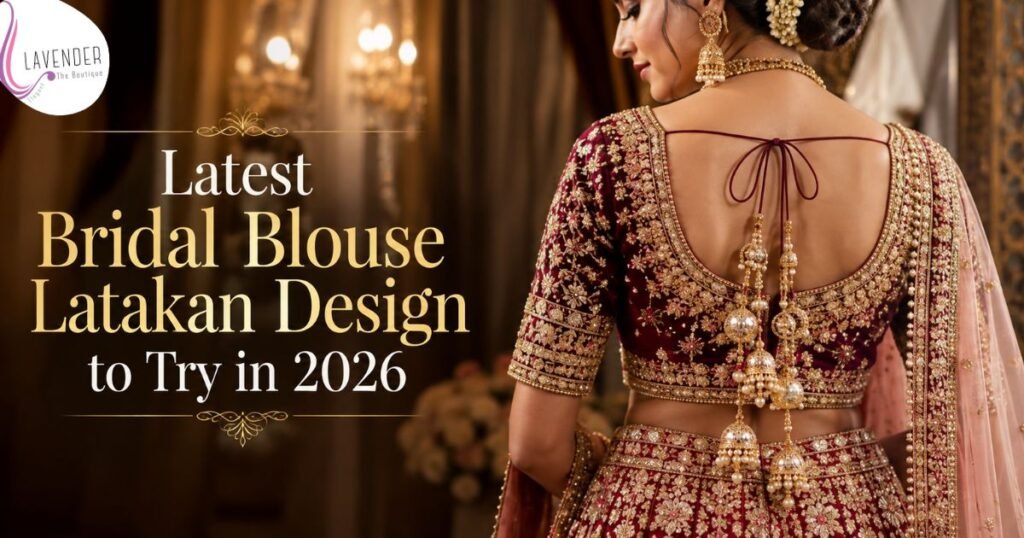
Embellishments are what add life to plain fabric and can transform a simple blouse into a head-turner. You can opt for customized embroidery or borders to add a regal look to your blouse for a special occasion. On the other hand, latkans or tassels at the back of the blouse add a youthful touch to a wedding lehenga. Embellishments such as bead hangings, tassels and fringes can also be added to the sleeve borders, which adds to the beauty of the blouse while being more affordable than embellishments or embroidery all over the blouse. Here are some examples of how embellishments can be used to create a statement blouse.
Now that you have finalized the basic design of your blouse, you can proceed with choosing the fabric. You may want to go ahead and use the blouse material that came with your saree or lehenga or may combine it with another fabric or choose a different fabric altogether for a statement look. From brocade and velvet for a royal feel to cotton and chiffon for a relaxed vibe, the options are endless when it comes to blouse materials. Take the help of your designer to select the most fitting fabric for the weather and occasion, which will complement the material of the rest of your outfit too. The designer can also recommend the appropriate lining for the blouse if it is needed. Colour selection of the blouse fabric is of utmost importance too, so that you do not end up with a mismatched colour palette. Take tips from your designer to choose the right contrasting or complementary colour for your blouse
Here is an article that provides more information regarding different blouse materials.
3. Measurements and Fittings
An ill-fitting blouse is one of the biggest fashion faux pas that you can commit. Cups that don’t sit right, sagging fabric, or sleeves that are a bit too tight can completely destroy the look of the blouse no matter how high in quality the fabric and embellishments may be. You need to make sure that the tailor takes your measurements correctly, and that you wear the right undergarments when being measured. If you are clueless as to how you can ensure that your measurements are right and how to identify the signs of an ill-fitting blouse.
Pro Tips From Our Designers
Do carry the undergarments that you plan to wear with your blouse on the final day to your fitting sessions. This way, you can ensure that the blouse does not cling to the undergarment and that the fabric or colour of the undergarment does not peek through.
You can opt for a blouse with a detachable cape to flaunt two different looks with just one blouse. This is perfect if you need a dramatic outfit for a special occasion but also want to reuse it later without looking too over the top.
With these clever tricks up your sleeve, you will definitely be able to help your designer bring the blouse of your dreams to life. We promise you that you will never have to deal with an ill-fitting or imperfect blouse ever again!