


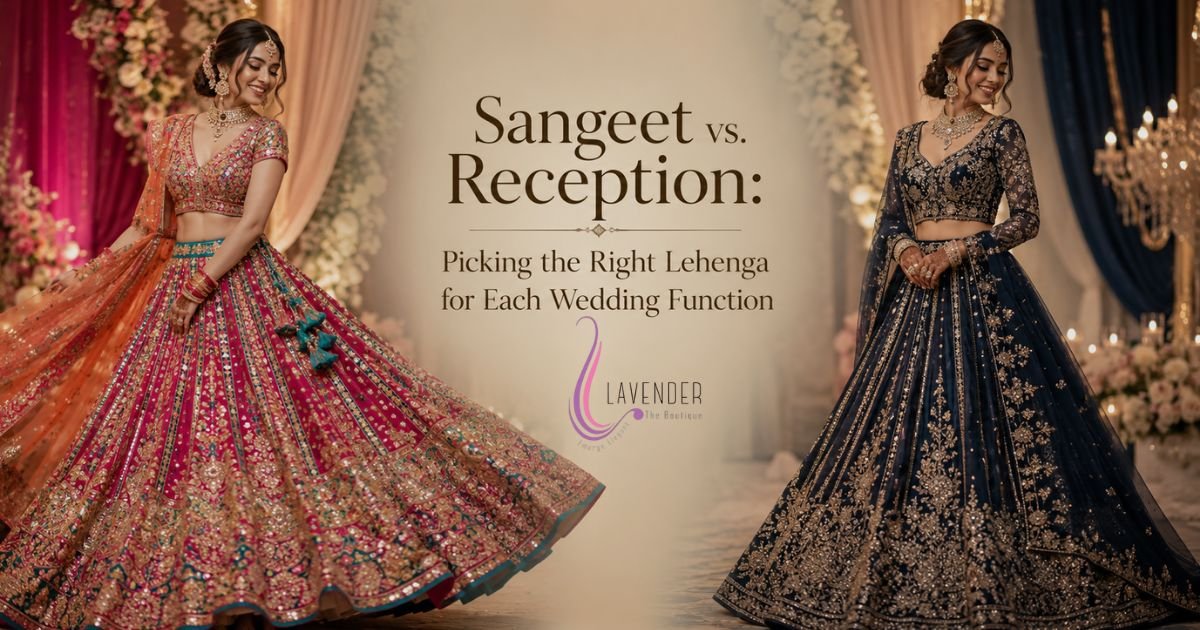
Indian weddings are a beautiful whirlwind of colors, music, rituals, and unforgettable moments. Among the many functions, the sangeet and reception stand out as two of the most glamorous celebrations. Both call for a stunning lehenga, yet the mood, energy, and practical needs of each event are quite different. Choosing the right lehenga for sangeet versus reception can make the difference between feeling restricted and dancing freely or looking understated when the evening calls for full glamour.
A well-chosen lehenga enhances your comfort, photographs beautifully under different lighting, and reflects the spirit of the occasion. Whether you are the bride, a bridesmaid, or a guest, understanding these differences helps you select pieces that feel intentional rather than interchangeable. At Lavender The Boutique, the focus remains on wearable elegance with custom stitching so every piece moves with you through long celebrations.
After the first hundred words of thoughtful consideration about wedding functions, many brides begin exploring actual options. One standout choice that works across festive evenings is the Banarsi Lehenge Choli with Mirror Work Dupatta, crafted in pure Banarasi silk with a mirrored dupatta that catches light beautifully.
Understanding the Sangeet: Energy, Movement, and Joy
The sangeet is typically a high-energy, music-filled evening centered on dance performances, family bonding, and lively celebrations. Guests and the bridal party often dance for hours. Comfort, ease of movement, and a look that photographs well under stage or party lighting become priorities.
Ideal sangeet lehengas tend to be lighter in weight. Fabrics such as chiffon, georgette, net, or art silk allow free movement without the bulk of heavy silk or dense embroidery. Silhouettes that flare gracefully—circular, kali-dar, or moderate A-line—look dynamic when you twirl yet remain manageable. Colors often lean vibrant or playful: emerald greens, bold magentas, multi-color mirror work, or soft pastels that still stand out in photos.
Embellishment is usually moderate. Mirror work, sequins, or light thread embroidery add sparkle without weighing the outfit down. Blouse styles can be more experimental—sleeveless, short-sleeved, or with interesting necklines—because the atmosphere is celebratory rather than formal. A dupatta is often draped lightly or even styled as a scarf so it does not hinder dancing.
For a lighter, fluid option perfect for dancing nights, consider the Emerald Green Chiffon Lehenga. Its pure chiffon base and circular flare make it easy to move in while the tissue blouse and printed art silk dupatta keep the look festive and complete.
Many modern brides also love Indo-Western touches for sangeet—subtle shimmer, printed motifs, or structured yet comfortable cholis. The goal is to look festive and camera-ready while remaining able to join every dance sequence without constant adjustment.
The Reception: Glamour, Presence, and Evening Function
The reception marks a more formal or semi-formal gathering where the newlyweds are formally introduced as a couple. The energy is celebratory but often more elegant and posed. Guests mingle, photographs are taken under soft evening or venue lighting, and the bride frequently becomes the visual centerpiece of the night.
Reception lehengas therefore lean toward greater presence. Richer fabrics such as Banarasi silk, velvet, brocade, or heavily embellished net create a luxurious drape and catch light dramatically. Silhouettes can be more structured or voluminous—classic flared, paneled, or even slightly heavier A-line cuts that photograph with impact. Colors often shift toward deeper jewel tones, metallics, classic reds, coral, or sophisticated neutrals that feel elevated under evening lights.
Embroidery and work tend to be denser or more intricate. Mirror work, zari, sequins, and hand embroidery create the sparkle expected for a night of formal celebration. Blouse designs may feature statement sleeves, sweetheart or V-necks, padding for a polished fit, or cape-style details. The dupatta is usually styled more traditionally or dramatically to complete the bridal or guest look.
A rich option that balances tradition and presence is the Coral Banarasi & Embroidered Sleeveless Blouse. Made from pure Dharmavaram silk with a velvet blouse, it offers the weight and sheen ideal for reception lighting while remaining wearable for extended hours.
For those who prefer a contemporary yet elegant statement, the Black Floral Lehenga with Blouse in art silk with digital floral print and embroidered brocade blouse delivers drama without excessive weight—perfect for evening receptions that call for sophisticated contrast.
Key Differences at a Glance
| Aspect | Sangeet Lehenga | Reception Lehenga |
| Fabric | Lightweight (chiffon, georgette, net) | Richer (Banarasi, velvet, silk, heavy net) |
| Weight & Movement | Easy to dance in | Structured presence, still comfortable |
| Embellishment | Moderate sparkle, mirror, sequins | Denser embroidery, zari, mirror work |
| Colors | Vibrant, playful, pastels | Jewel tones, metallics, classic deep hues |
| Silhouette | Circular, kali, fluid flare | Flared, paneled, statement volume |
| Overall Mood | Energetic, fun, free-moving | Elegant, glamorous, photogenic |
These distinctions are guidelines rather than rigid rules. Destination weddings, intimate gatherings, or personal style preferences can blur the lines. Many women successfully wear a lighter Banarasi or a softly embellished silk piece for both functions with different styling of the dupatta and jewelry.
Practical Tips for Choosing and Styling
- Prioritize Fit and Comfort Custom stitching makes a significant difference. A perfectly fitted waist, comfortable blouse length, and appropriate skirt length prevent constant tugging. At Lavender The Boutique every lehenga can be tailored to individual measurements.
- Consider Venue and Season Outdoor sangeet in warm weather favors breathable fabrics. Indoor air-conditioned receptions allow richer materials. Winter evenings open the door to velvet or heavier silks.
- Think About Photography Sangeet lighting is often brighter and more dynamic; lighter colors and reflective work (mirrors, sequins) perform well. Reception lighting tends to be softer and warmer; deeper tones and metallic embroidery create depth in photos.
- Plan the Full Look Jewelry, footwear, and hairstyle should complement the lehenga’s weight and formality. Statement jhumkas or a heavy necklace may suit a reception better, while lighter pieces keep the focus on movement during sangeet.
- Reuse and Restyle Potential A versatile piece from a strong lehenga collection can often be restyled for other functions or future events by changing the blouse or draping style.
When exploring fresh options, searching for lehenga choli design new styles helps uncover current silhouettes and color combinations that balance tradition with contemporary ease.
Building a Cohesive Wedding Wardrobe
Many brides prefer a progression of looks across functions. A vibrant, lighter lehenga for sangeet followed by a richer, more formal piece for reception creates visual variety in the wedding album. Guests can apply the same logic—choosing playful pieces for daytime or dance-heavy events and elevated ones for evening formality.
Browsing curated options allows you to compare fabrics side by side. Whether you are drawn to the heirloom quality of Banarasi silk or the fluid movement of chiffon, selecting pieces that align with the specific energy of each function ensures you feel confident and celebrated.
Final Thoughts
Choosing between a sangeet and reception lehenga is less about strict rules and more about matching the outfit to the spirit of the evening. Movement and joy define the sangeet; presence and elegance define the reception. When you select fabrics, silhouettes, and levels of embellishment with these differences in mind, every photograph and every dance step feels intentional.
Explore the full range of carefully selected pieces and experience custom fitting that prioritizes both beauty and comfort. One reliable starting point is the thoughtfully curated lehenga collection available at Lavender The Boutique, where tradition meets wearability for every wedding function.
Frequently Asked Questions
1. Can the same lehenga work for both sangeet and reception?
Yes, especially if it sits in the middle ground—moderate weight, versatile color, and adaptable styling. Changing the jewelry, hairstyle, and dupatta drape can shift the look from playful to more formal.
2. What are the best fabrics for a sangeet lehenga?
Lightweight fabrics such as chiffon, georgette, net, and art silk allow free movement and keep you comfortable during hours of dancing while still offering enough structure and shine for photographs.
3. Which colors photograph best for reception under evening lights?
Jewel tones (emerald, teal, deep coral, magenta), metallics, classic reds, and rich neutrals tend to hold depth and reflect soft lighting beautifully. Black with contrasting embroidery also creates striking evening drama.
4. How important is custom stitching for wedding lehengas?
Extremely important. A custom-fitted waist, blouse, and length ensure the lehenga stays in place while dancing or posing and photographs cleanly without awkward pulls or gaps.
5. Where can I find both sangeet-friendly and reception-ready lehengas in one place?
Specialized boutiques that offer a range of fabrics and weights under one collection, along with custom stitching options, make it easier to select complementary pieces for different functions without compromising on quality or fit.