


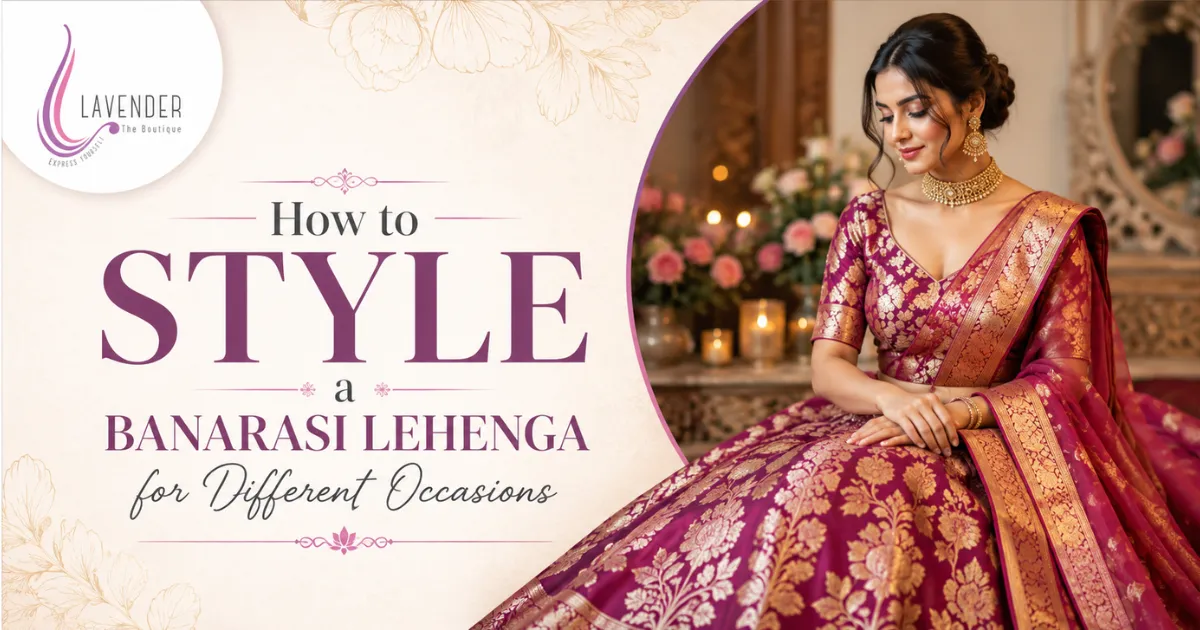
A Banarasi lehenga is one of those rare ethnic wear investments that never goes out of style. Woven on the traditional looms of Varanasi with intricate zari work, silk threads, and motifs passed down through generations, a Banarasi silk lehenga carries centuries of craftsmanship in every fold. But here’s the thing – the same lehenga can look completely different depending on how you style it.
Whether you’re a bride searching for the perfect banarasi lehenga for different occasions, a guest attending a friend’s sangeet, or someone shopping for Banarasi lehenga for wedding functions, this guide will walk you through exactly how to style this timeless piece for every occasion on your calendar.
If you’re still exploring your options, browse our curated collection of Banarasi lehengas for women to find a piece that matches your vision before you start planning the styling.
Why Banarasi Lehengas Are a Wardrobe Essential
Before we get into styling, it helps to understand why the Banarasi lehenga has remained a bridal and festive wear favorite for decades:
- Rich heritage weave – Real zari, silk, and brocade work that photographs beautifully
- Versatility – Can be dressed up for a wedding or toned down for a puja
- Longevity – A well-made Banarasi silk lehenga is a piece you can wear for years, even generations
- Investment value – Often passed down as heirlooms in Indian families
Now, let’s get into the styling details for each occasion.
1. Styling a Banarasi Lehenga for Your Wedding Day
For brides, the bridal Banarasi lehenga is often the centerpiece of the entire wedding look. Here’s how to style it right:
Color choice: Deep reds, maroons, and wine tones remain the most popular for weddings, though brides are increasingly opting for pastel Banarasi lehengas with heavy zari borders for a modern twist.
Blouse: Go for a heavily embellished blouse with intricate hand embroidery, mirror work, or stone detailing that complements the zari of the lehenga rather than competing with it.
Dupatta draping: The classic double-dupatta drape – one over the head and one pleated over the shoulder – adds drama and works beautifully with the heavy borders typical of Banarasi weaves.
Jewelry: Since Banarasi weaves are already rich in texture, balance the look with a statement necklace (kundan or polki) and let your maang tikka and jhumkas do the rest of the talking. Avoid over-layering, as the fabric itself carries visual weight.
Footwear: Embellished juttis or heels in gold or a matching contrast tone complete the bridal silhouette.
Looking for bridal-ready pieces? Explore our lehenga collection for women designed specifically with wedding-day drama in mind.
2. Styling a Banarasi Lehenga for Sangeet and Mehendi
The sangeet and mehendi are all about comfort without compromising on glamour, since you’ll likely be dancing and moving around a lot.
Color choice: Bright shades like coral, teal, magenta, or mustard work well and photograph beautifully under function lighting.
Blouse: A lighter, halter-neck or off-shoulder blouse gives you ease of movement while still looking festive.
Draping: Skip the double dupatta here – a single dupatta draped across one shoulder or pinned at the waist keeps things breezy.
Jewelry: Choose lighter, statement earrings paired with a choker instead of a heavy necklace. Floral jewelry is also a popular choice for mehendi functions.
Footwear: Comfortable block heels or embellished flats are ideal, since you’ll be on your feet dancing for hours.
3. Styling a Banarasi Lehenga for Festive Occasions (Diwali, Karva Chauth, Navratri)
A Banarasi lehenga for festive occasions brings traditional elegance to celebrations at home or with family.
Color choice: Rich jewel tones – emerald green, royal blue, or deep purple – feel festive without being overly bridal.
Blouse: A simple, elegant blouse with subtle zari work keeps the focus on the lehenga’s weave.
Draping: A single pleated dupatta pinned neatly at the shoulder works well for pujas and family gatherings.
Jewelry: Temple jewelry or a traditional gold set pairs beautifully with the classic motifs found in most Banarasi weaves.
Hair and makeup: A neat bun with fresh or artificial flowers, paired with subtle makeup, keeps the overall look traditional and elegant.
4. Styling a Banarasi Lehenga for a Reception or Cocktail Party
For receptions, you can experiment with a more contemporary, fusion-inspired take on your Coral Banarasi & Embroidered Sleeveless Blouse look.
Color choice: Pastels, champagne, or metallic-toned Banarasi lehengas suit the softer, glamorous reception aesthetic.
Blouse: Opt for a trendy sweetheart neckline, corset-style, or backless blouse for a modern silhouette.
Draping: A pre-stitched or belted dupatta look gives a red-carpet-ready finish that’s easy to manage through the evening.
Jewelry: Go minimal with diamond or American diamond (AD) jewelry to give the outfit a contemporary shimmer instead of traditional gold.
Footwear: Heeled sandals in nude or metallic shades elongate the silhouette and keep the look sleek.
5. Styling a Banarasi Lehenga for Casual or Haldi Functions
Yes, even Banarasi lehengas can be styled down for daytime or casual functions like haldi ceremonies.
Color choice: Yellow, ivory, light pastel or golden banarsi lehenga choli are perfect for haldi and daytime events.
Blouse: A simple, short-sleeved or cap-sleeve blouse keeps things breezy for outdoor functions.
Draping: Skip the dupatta altogether, or drape it loosely around the neck for a relaxed look.
Jewelry: Minimal jewelry – a pair of jhumkas and simple bangles – is all you need.
Hair: A loose braid with flowers complements the casual, festive vibe of a haldi function perfectly.
Quick Styling Tips to Remember
- Let the fabric lead – Since Banarasi weaves are already ornate, avoid overloading the outfit with too many accessories.
- Balance heavy with light – A heavy lehenga pairs best with lighter jewelry and vice versa.
- Match blouses to occasion, not just lehenga – The same lehenga can look bridal or festive purely based on blouse styling.
- Invest in the right draping style – Draping changes the entire silhouette and mood of the outfit.
- Consider the season – Lighter Banarasi silks work well for summer functions, while richer weaves suit winter weddings.
If you’re building an occasion-ready wardrobe, it’s worth exploring a few different Banarasi lehenga designs for women so you have pieces ready for weddings, festive days, and everything in between.
Final Thoughts
A Banarasi lehenga is far more than a wedding outfit – it’s a versatile piece that, with the right styling, can take you from a haldi ceremony to a wedding reception with equal grace. The key lies in understanding how blouse choice, draping style, and jewelry pairing can completely transform the same outfit for different occasions.
Ready to find your perfect piece? Explore our full range of Banarasi lehengas for women at Lavender The Boutique and discover a design that fits every celebration on your calendar.
Frequently Asked Questions
1. Can a Banarasi lehenga be worn for multiple occasions?
Yes, A Banarasi lehenga is one of the most versatile ethnic outfits – the same piece can be styled differently for a wedding, sangeet, or festive occasion simply by changing the blouse, dupatta drape, and jewelry.
2. What blouse works best with a Banarasi lehenga?
It depends on the occasion. Heavily embroidered blouses suit weddings, while simpler or trendier necklines like halter or off-shoulder work better for sangeet and reception functions.
3. How do I style a Banarasi lehenga for a daytime function?
For daytime or casual functions like haldi, choose lighter colors, skip the heavy dupatta drape, and keep jewelry minimal for a relaxed yet festive look.
4. What jewelry pairs best with a Banarasi lehenga?
Since Banarasi weaves are rich in texture and zari work, it’s best to balance the look with either one statement piece (like a necklace) or lighter jewelry, rather than layering too many heavy pieces.
5. Is a Banarasi lehenga suitable for a bride?
Absolutely, a bridal Banarasi lehenga, especially in deep reds or maroons with heavy zari borders, is a popular and traditional choice for Indian brides across many regions.