


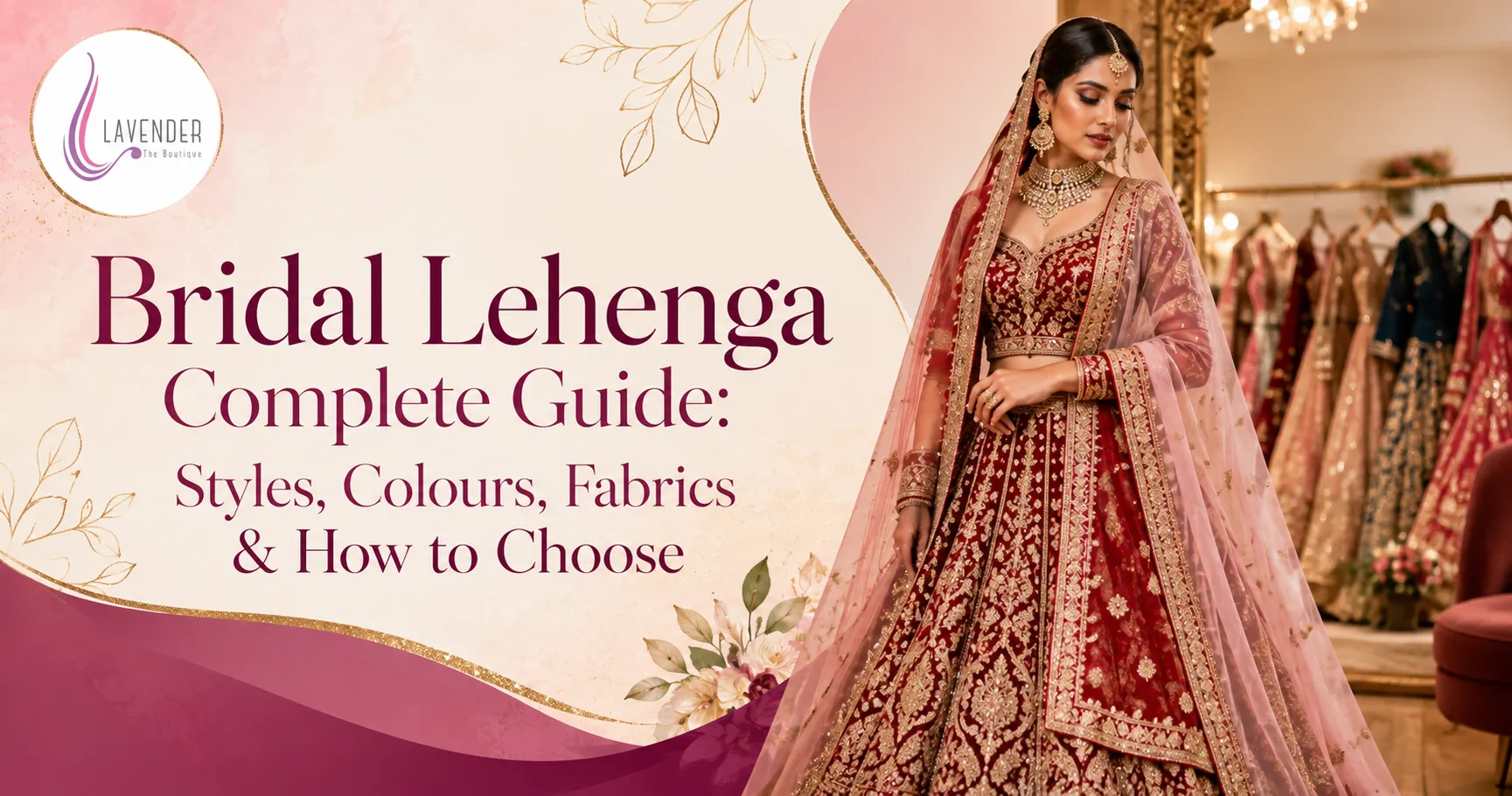
Your bridal lehenga is more than just an outfit. It is the one piece of clothing you will remember for the rest of your life, the one your children will pull out of the almirah decades later and ask, “Mumma, is this what you wore?” With so many styles, colours, and fabrics flooding the market today, choosing the right one can feel overwhelming rather than exciting.
This guide breaks it all down in one place, so you walk into your first lehenga trial knowing exactly what to look for, not just what looks pretty on Pinterest.
What Is a Bridal Lehenga?
A bridal lehenga is a three piece ensemble made up of a flared skirt (the lehenga), a fitted blouse (the choli), and a dupatta or veil. It is the go to bridal outfit across most Indian weddings, especially in North Indian, Punjabi, and Gujarati ceremonies, and has become a favourite for South Indian and Bengali brides as well who want to mix things up for their reception or sangeet.
Unlike a saree, a lehenga offers structure and volume, which makes it easier to move, dance, and pose in for those all important wedding photographs.
Popular Bridal Lehenga Styles
Every bride has a different silhouette she is drawn to. Here are the most popular ones and who they tend to suit.
A-Line Lehenga
This is the most flattering and forgiving silhouette for almost every body type. It flares gently from the waist rather than the hips, creating a slimming, elegant line. If you want comfort along with grace, an A-line is a safe and stylish pick.
Circular or Flared Lehenga
This is the classic, dramatic bridal silhouette with a lot of volume, often stitched using 8 to 16 metres of fabric. It creates that iconic “twirl” moment and photographs beautifully during the varmala or the first dance. It suits brides who want a grand, larger than life look.
Mermaid or Fishtail Lehenga
Fitted through the hips and thighs before flaring out near the knees, this style is bold and modern. It works best for brides with an hourglass or slim frame who want a contemporary, red carpet feel rather than a traditional one.
Panelled Lehenga
Made using vertical fabric panels stitched together, often in contrasting colours or fabrics, this style gives a rich, layered look without being too heavy. It is a great middle ground between traditional and modern.
Pre-Draped Lehenga Saree
For brides who love the saree drape but want the ease of a lehenga, this hybrid style is stitched to look pre-draped. It is a wonderful choice for the reception if you want something less traditional than a bridal lehenga but still festive.
Bridal Lehenga Colours and What They Mean
Colour is often the first decision a bride makes, and it usually carries family tradition, regional custom, or personal meaning.
- Red: The most traditional bridal colour across India, symbolising prosperity, fertility, and marital bliss. It remains the top choice for the wedding day itself.
- Maroon and Wine: A deeper, more muted alternative to red that photographs beautifully and suits most skin tones.
- Pink and Blush: Increasingly popular for modern brides, especially for daytime weddings or as a softer alternative to red.
- Gold and Champagne: A regal, opulent choice often seen in South Asian and Middle Eastern inspired bridal wear.
- Green: Traditional for many Punjabi and Muslim weddings, symbolising new beginnings and growth.
- Pastels: Mint, lilac, and powder blue have become favourites for sangeet and mehendi functions rather than the main wedding day.
- Black and Navy: Rare for the wedding ceremony itself but a striking, glamorous choice for the reception.
If you are unsure, think about your venue lighting, your wedding photographs, and the colours your family traditionally favours before locking anything in.
Fabrics Used in Bridal Lehengas
The fabric decides how your lehenga falls, how heavy it feels by the end of a 10 hour wedding day, and how long it lasts in your wardrobe.
Silk
Rich, structured, and naturally lustrous, silk is the traditional choice for bridal wear. Banarasi and Kanjivaram silks are especially prized for their intricate weaves and durability.
Velvet
Heavy, warm, and luxurious looking, velvet is ideal for winter weddings. It holds embroidery beautifully but can feel warm in summer or outdoor settings.
Georgette
Lightweight and flowy, georgette is a good choice for brides who want movement and comfort, particularly for the sangeet or a destination wedding.
Net
Often used as an overlay fabric for heavily embellished lehengas, net gives volume without excessive weight, making it popular for circular silhouettes.
Organza
Structured yet lightweight, organza holds its shape well and has become a favourite for contemporary brides who want a fresh, less traditional finish.
Satin
Smooth and glossy, satin drapes beautifully and works well for sleek, modern silhouettes like the mermaid lehenga.
How to Choose the Right Bridal Lehenga
1. Start With Your Body Type
Choose a silhouette that flatters your natural shape rather than forcing a trend. A-line suits nearly everyone, circular lehengas add volume for petite frames, and fishtail styles work best on curvier or taller brides.
2. Factor In Your Wedding Season
Velvet and heavy silk work beautifully for winter weddings, while georgette, organza, and lighter silks are better suited to summer or outdoor ceremonies.
3. Think About Comfort, Not Just Look
You will be wearing this outfit for several hours, through rituals, photographs, and dancing. Try sitting, walking, and even climbing a few stairs in it during your trial before you finalise anything.
4. Match It to Your Function
Not every lehenga needs to be your heaviest one. Save the most ornate, heaviest piece for the wedding ceremony, and pick something lighter and more comfortable for the sangeet, mehendi, or reception.
5. Consider the Embroidery Weight
Zardozi, dabka, and stone work look magnificent but add significant weight. If you are not used to wearing heavy outfits, ask your boutique to balance embroidery on the skirt with a lighter blouse, or vice versa.
6. Don’t Skip the Blouse
The choli can make or break the entire look. Necklines, sleeve styles, and back designs deserve as much attention as the lehenga skirt itself, especially since most wedding photographs are taken from the front and during the pheras.
7. Get It Tailored, Not Just Altered
A truly well fitted lehenga is tailored to your measurements from scratch rather than adjusted from a standard size. This is where working with an experienced boutique makes all the difference.
Final Thoughts
Choosing your bridal lehenga is a personal journey that blends tradition, comfort, and your own sense of style. There is no single “right” choice, only the one that makes you feel most like yourself on the biggest day of your life. Take your time, try on more than you think you need to, and trust how an outfit feels when you move in it, not just how it looks in the mirror.
If you are still exploring options, browse our bridal lehenga collection to see the range of styles, colours, and fabrics available, or look into our custom bridal blouse designs to complete your look with a perfectly fitted choli.
Not sure where to begin your search? Our guide on choosing the right bridal boutique walks you through exactly what to look for before you buy. And if you are also planning outfits beyond the wedding day, our post on picking the right lehenga for sangeet and reception will help you plan your entire trousseau with confidence.
Ready to Find Your Dream Bridal Lehenga?
At Lavender The Boutique, every lehenga is crafted with premium fabrics, intricate handwork, and a fit made just for you. Book a personal styling consultation with our design team and let us help you find the one you will remember forever.
Visit Lavender The Boutique to explore our latest bridal collection, or get in touch with us today to book your consultation.