Be it a stunning silk saree, a wedding lehenga, or an Indo-western skirt, a tailor-made blouse is what truly adds personality to the outfit. It gives the wearer the freedom to express their sense of style by playing around with different blouse patterns, fabrics, and embellishments. Replacing a plain blouse in a solid colour with an embellished blouse in a contrasting shade to your saree or lehenga can completely transform the look of the ensemble. However, choosing the wrong blouse design, fabric or colour can be a recipe for disaster and can ruin the overall look of the entire outfit. Here is a step-by-step guide on how you can design the perfect blouse for any outfit and occasion by customizing each detail of the garment for the most flattering outcome.
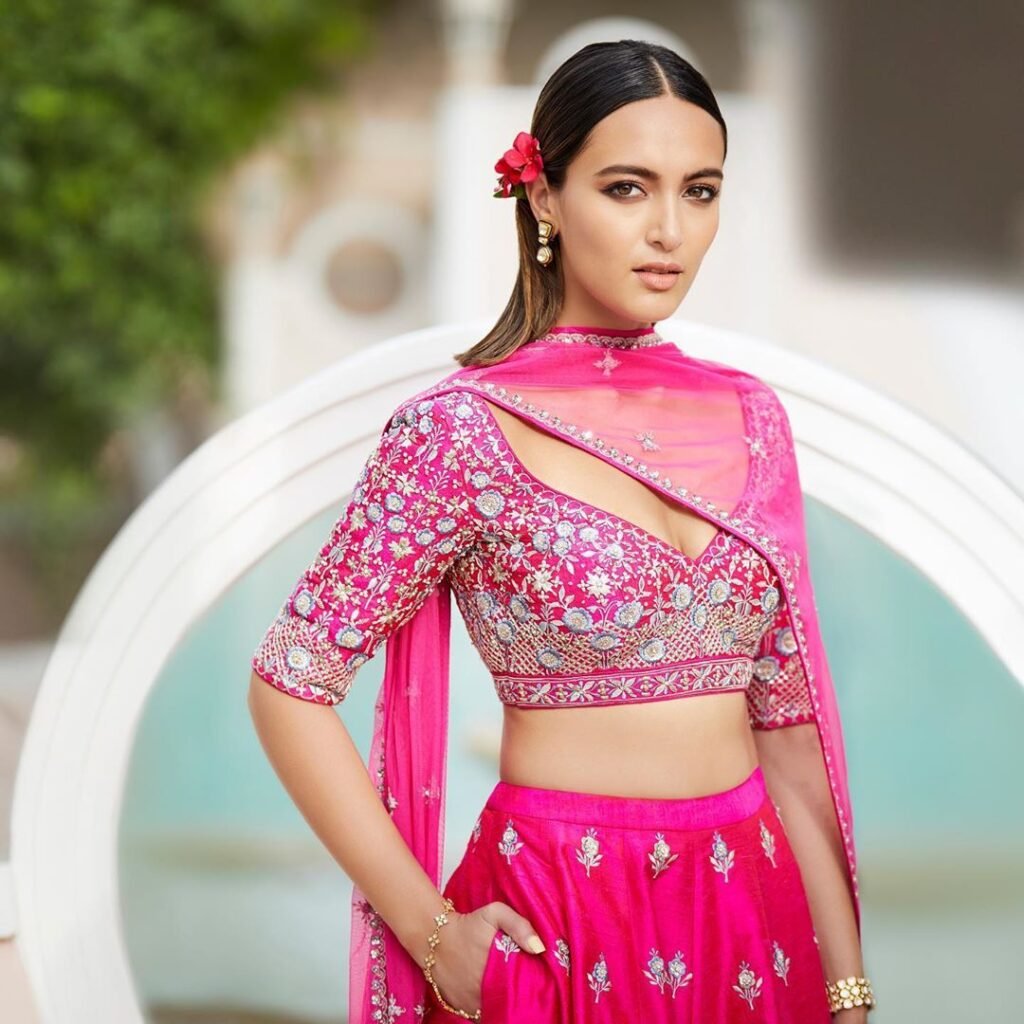
Source: anitadongre.com>
1. Choosing the Design and Embellishments
The first step of the blouse designing process is to choose the style of each of the elements of the blouse. These elements include the neckline, the sleeves, the length and the cut of the blouse, to name a few. If you have a vision of the overall vibe you want to go for with the outfit, it will help you select the best style for your blouse. Images of blouse designs that you like, the dress code for the occasion, your body type, and the weather can all help you narrow down on the final design elements of the blouse. As an example, for a traditional temple wedding, a round neckline with elbow length sleeves is an appropriate choice while for a party wear lehenga, you may want to go for something bolder like an off-shoulder blouse. Here are some tips on how to select these key design elements of your blouse.
1a) Front Neckline
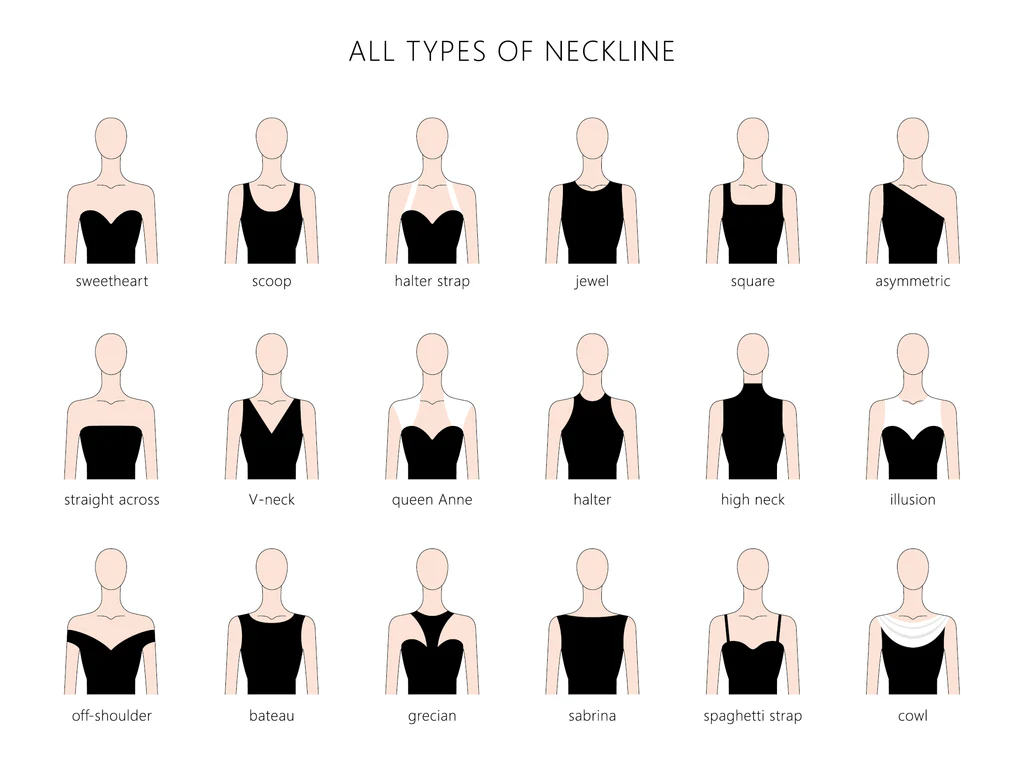
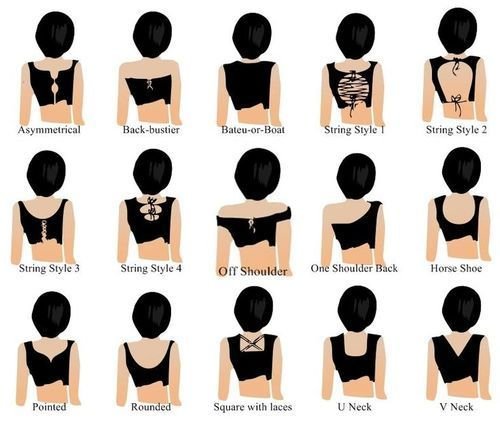
The front and back necklines are arguably the most important design elements of the blouse because they tend to attract the most attention. You can go for similar styles of necklines for the front and the back or can opt for a statement front or back neckline while keeping the other one simple. The conservative options for front necklines include the round neck, the V-neck, the Square neck and the U-neck, the depth of which can be adjusted as per your preference. A high neck, a Queen Anne neckline or a Mandarin neckline can add vintage elegance to the blouse whereas a sweetheart neckline or a halter neck are the best ways to show off your collar bones.
1b) Back Neckline
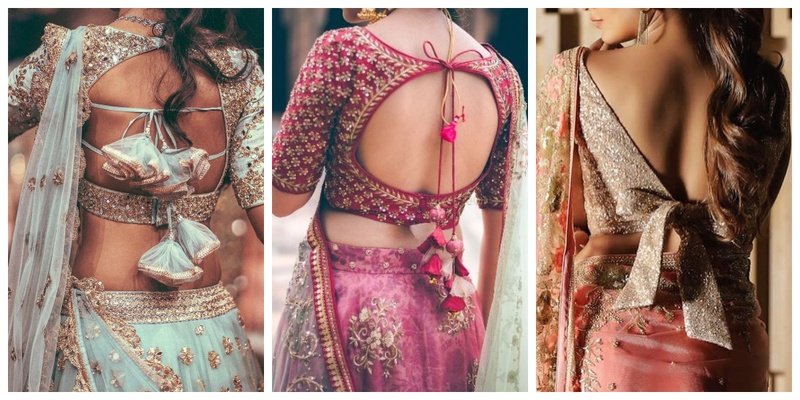
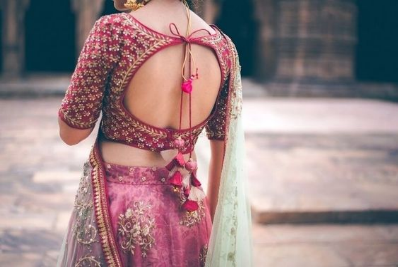
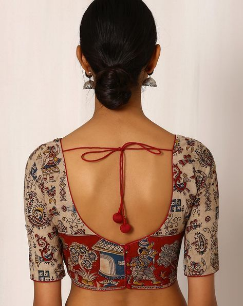
If your pallu or dupatta is not going to cover your back or is sheer then a statement back neckline can make your blouse stand out in an alluring manner. You can play around with different string styles, such as a cross-stringed pattern or a double dori, if you wish to show off your back. A keyhole back is also an excellent statement option that can be customized as per the amount of coverage you are comfortable with. An illusion back made of sheer material is another great choice if you do not want to bare your skin but still want your blouse to be a head-turner.
Infographic –
1c) Length
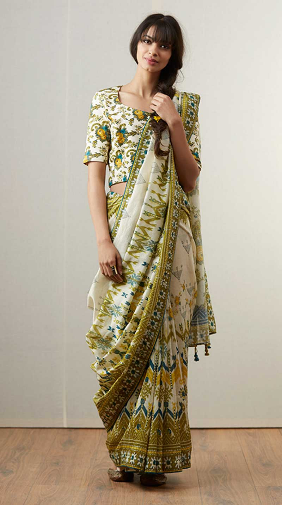
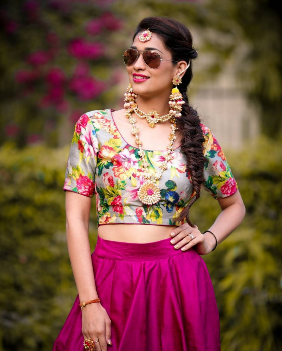
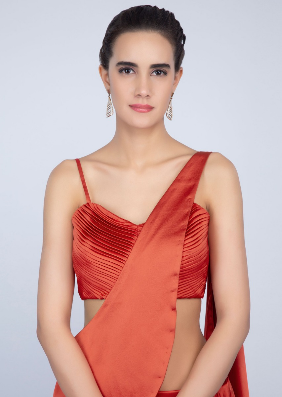
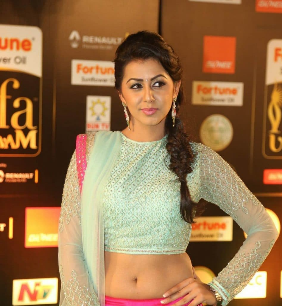
The length of the blouse needs to be determined based on your body type while maintaining a balance between the lower and upper halves of the outfit. If you wish to draw attention away from your waistline then you can opt for a long blouse that will give you a slimmer appearance. If your lehenga or skirt is high waisted then you can opt for a crop top style blouse to give a longer appearance to your legs or you can even opt for a bustier-style to flaunt your curves and give a longer appearance to your torso. With a mid-waisted lehenga, skirt or saree, a regular blouse length of 14-16 inches is a safe choice that does not bring too much attention to the waist region and provides ample coverage.
|
Long |
Crop |
Bustier |
Regular |
 |  |  |  |
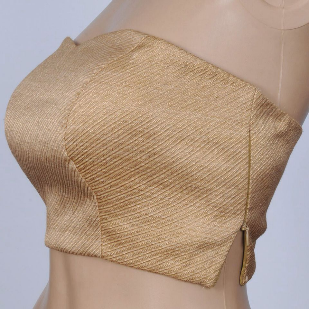
1d) Openings
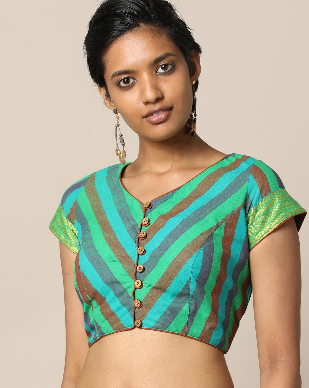
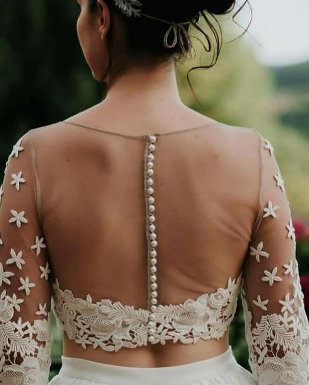
The opening of the blouse refers to where the zippers, hooks or fasteners go. Ideally, one should choose between a front, side, or back opening such that the pallu hides the hooks or zippers, but fancy buttons or zippers can also be added to enhance the beauty of the blouse. Also, if you are placing your embellishments or embroidery on the front half of the blouse then the opening is typically added at the back or the sides, and vice-versa. You can even opt for modern-age concealed zippers that do not interfere with the design and do not create gaps in the fastening unlike traditional buttons or hooks.
|
Front |
Back |
Side |
 |  |  |
1e) Cuts
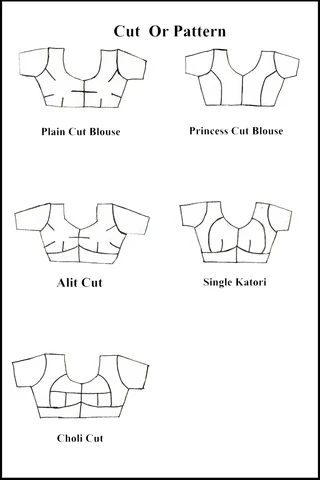
The cut of a blouse refers to how the fabric is cut to create the desired shape in the bust area, which essentially means that different cuts have different placement of visible seams in the bust region. You can choose from popular cuts, such as princess cut, single dart, and half katori, based on how much you wish to highlight the bust area. You can ask your designer to suggest the best cut as per your body type and your outfit.
1f) Sleeve Length
The ideal length of the sleeve of your blouse will depend upon several factors. First and foremost, you need to decide whether or not you wish to flaunt your upper arms, as some people are more comfortable with sleeves that cover this area. Secondly, how you plan to drape your saree or dupatta will also give you a fair idea of how much your sleeves should be visible through the drape. In terms of weather and dress codes, you may want to opt for cap sleeves or a sleeveless blouse for daytime, summer occasions and 3/4th or bracelet sleeves for winter events or formal events with a traditional dress code.
1g) Sleeve Types
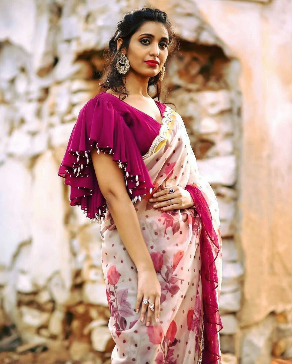
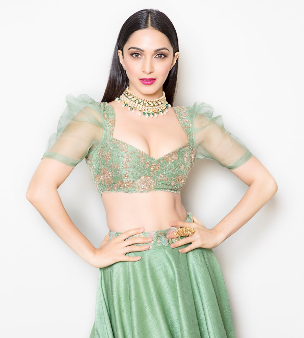
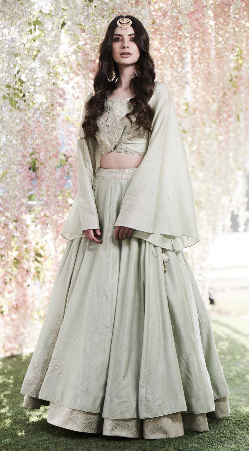
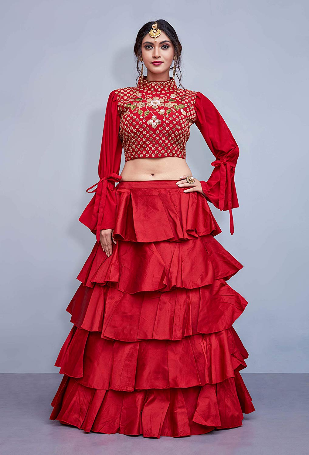
A statement sleeve style can jazz up your outfit if your saree or lehenga skirt is relatively plain or contains subtle design elements. Bell sleeves or flounce sleeves can add a vintage look to the ensemble whereas flowy cape sleeves or butterfly sleeves add a whimsical element that also conceals heavier upper arms. On the other hand, if you have toned arms that you wish to flaunt then cap sleeves will work well for you. If you have thin arms and toned shoulders then puff sleeves or balloon sleeves will complement these features really well whereas tulip and ruffle sleeves have a slimming effect on the arms while looking incredibly feminine. Remember to maintain a balance between the lehenga skirt and the blouse – if there is too much can-can in your lehenga then opt for simpler sleeves to prevent looking too poofy. For wedding lehenga blouses, you may want to avoid long and flowy statement sleeves if you are going to perform rituals near a fire, as you wouldn’t want to risk the fabric coming in contact with the flame.
|
Ruffle |
Puff |
Balloon |
Tulip |
 |  | 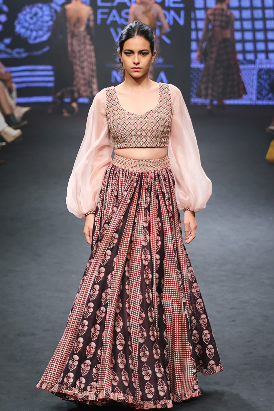 | 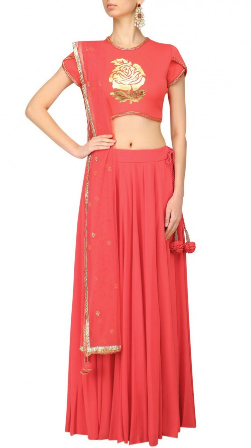 |
|
Cape |
Butterfly |
Bell |
Flounce |
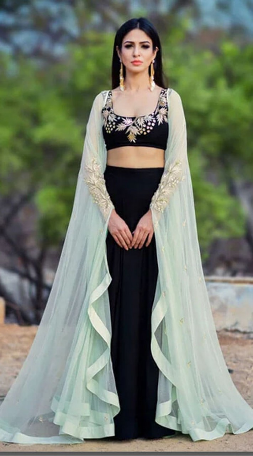 | 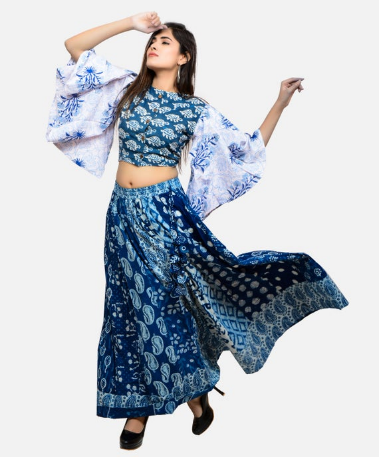 |  |  |
1h) Shoulder Styles
If you are blessed with a great pair of collar bones then why not flaunt them in an off-shoulder blouse? A bandeau, one-shoulder blouse or a blouse with spaghetti straps will draw attention to your neck and shoulders and can be complemented further with a statement choker necklace. These styles look particularly stunning with crop top lehenga sets and party wear lehengas for cocktails and sangeets.
Check out this article for some more insights on how to accentuate your best features with the right blouse style
1i) Embellishments
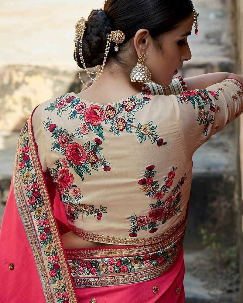
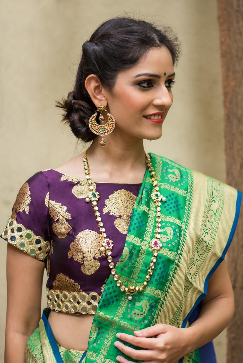
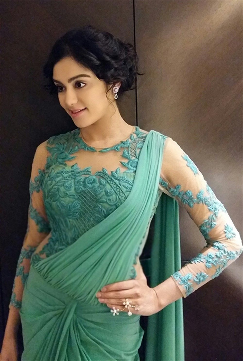
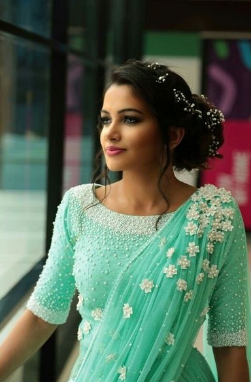
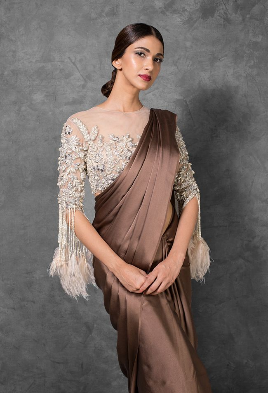
Embellishments are what add life to plain fabric and can transform a simple blouse into a head-turner. You can opt for customized embroidery or borders to add a regal look to your blouse for a special occasion. On the other hand, latkans or tassels at the back of the blouse add a youthful touch to a wedding lehenga. Embellishments such as bead hangings, tassels and fringes can also be added to the sleeve borders, which adds to the beauty of the blouse while being more affordable than embellishments or embroidery all over the blouse. Here are some examples of how embellishments can be used to create a statement blouse.
|
Embroidery |
Latkans |
Piping |
Border |
Lace |
Pearls |
Sleeve embellishments |
 |  |  |  |  |  |  |
Click here for more style inspiration
2. Fabric Selection
Now that you have finalized the basic design of your blouse, you can proceed with choosing the fabric. You may want to go ahead and use the blouse material that came with your saree or lehenga or may combine it with another fabric or choose a different fabric altogether for a statement look. From brocade and velvet for a royal feel to cotton and chiffon for a relaxed vibe, the options are endless when it comes to blouse materials. Take the help of your designer to select the most fitting fabric for the weather and occasion, which will complement the material of the rest of your outfit too. The designer can also recommend the appropriate lining for the blouse if it is needed. Colour selection of the blouse fabric is of utmost importance too, so that you do not end up with a mismatched colour palette. Take tips from your designer to choose the right contrasting or complementary colour for your blouse
Here is an article that provides more information regarding different blouse materials.
3. Measurements and Fittings
An ill-fitting blouse is one of the biggest fashion faux pas that you can commit. Cups that don’t sit right, sagging fabric, or sleeves that are a bit too tight can completely destroy the look of the blouse no matter how high in quality the fabric and embellishments may be. You need to make sure that the tailor takes your measurements correctly, and that you wear the right undergarments when being measured. If you are clueless as to how you can ensure that your measurements are right and how to identify the signs of an ill-fitting blouse.
Pro Tips From Our Designers
|
With these clever tricks up your sleeve, you will definitely be able to help your designer bring the blouse of your dreams to life. We promise you that you will never have to deal with an ill-fitting or imperfect blouse ever again!