


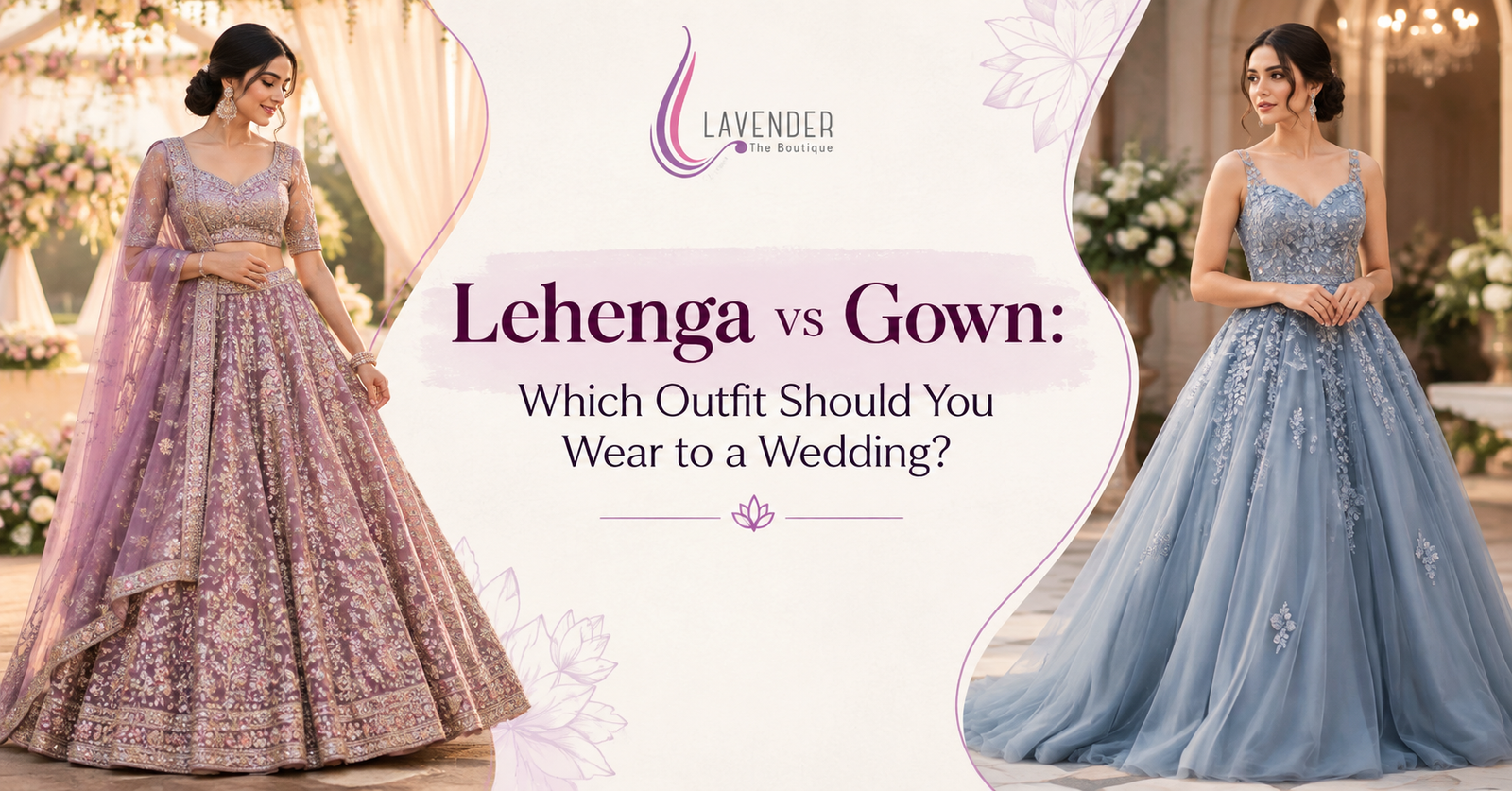
Wedding invitations are exciting, but they bring one big question: what will you wear? For many women, it comes down to two choices. Do you go traditional with a lehenga, or modern and elegant with a gown?
Both outfits can make you the best-dressed guest in the room. The right pick depends on the type of wedding, the time of day, your body type, your comfort and your budget. This guide compares the two so you can choose with confidence.
What Is a Lehenga?
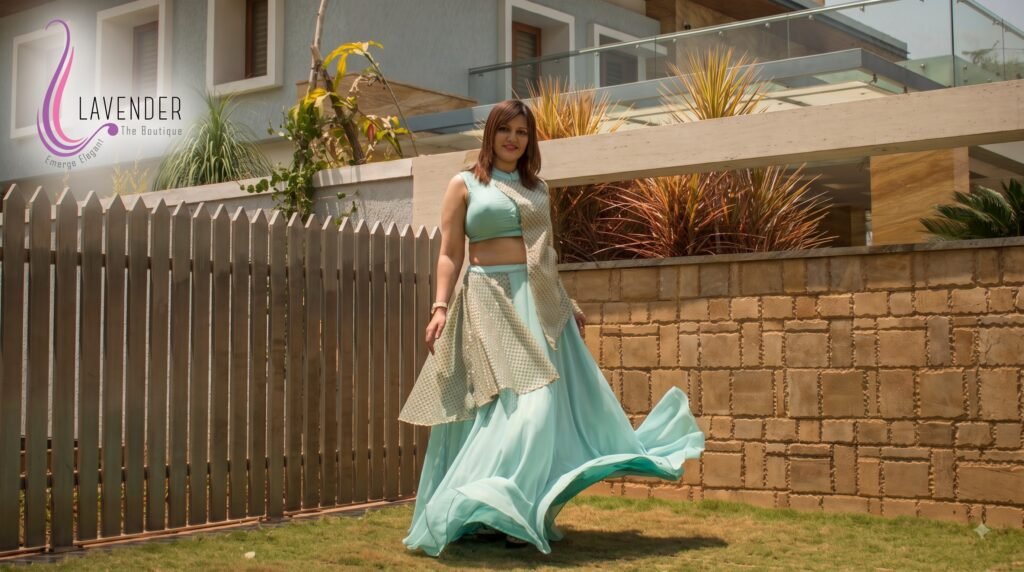
A lehenga is a traditional Indian outfit made of three pieces: a long flared skirt, a fitted blouse (choli) and a dupatta. It is usually made in silk, georgette, net or velvet, and finished with embroidery, zari, sequins or mirror work.
Lehengas suit almost every wedding function, from mehendi and haldi to sangeet and the main ceremony. If you want a rich, festive look, browse our collection of lehenga for women to see the range of colours and silhouettes.
What Is a Gown?
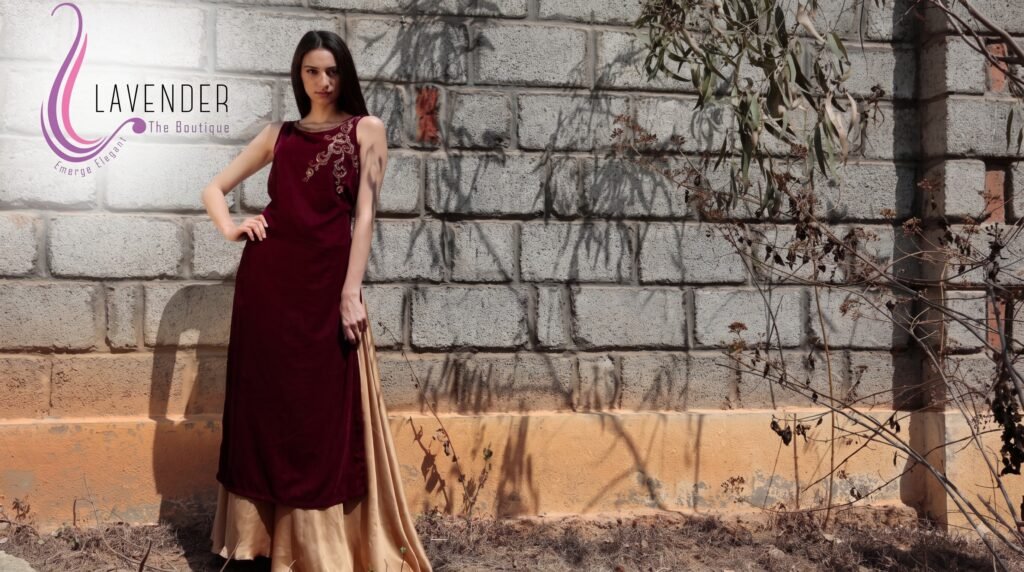
A gown is a floor-length dress with a fitted or flowing silhouette. Wedding-friendly gowns come in fabrics like satin, crepe, chiffon and net. Many are Indo-western, which means they blend Indian embroidery with a Western cut.
Gowns work especially well for cocktail nights, receptions and modern weddings where the dress code leans contemporary. If you want something sleek and photo-ready, explore our party wear gowns for ideas.
Lehenga vs Gown: Quick Comparison
| Factor | Lehenga | Gown |
| Style | Traditional, festive, ornate | Modern, sleek, elegant |
| Best for | Mehendi, sangeet, wedding ceremony | Cocktail, reception, engagement |
| Comfort | Can be heavy with dense work | Usually lighter and easier to move in |
| Styling | Needs a dupatta and jewellery | Minimal accessories work well |
| Versatility | Can be restyled with different blouses | Can be worn again to parties and events |
| Dance friendliness | Great twirl, but can be heavy | Easy to walk in, depends on the cut |
When to Choose a Lehenga
1. For traditional wedding functions. If the wedding follows classic customs, a lehenga fits the mood. It respects the occasion and photographs beautifully during rituals, family portraits and the baraat.
2. For daytime and festive events. Pastel lehengas with light embroidery look fresh at haldi and mehendi. Rich jewel tones such as maroon, emerald and royal blue suit evening functions.
3. When you want a statement look. Heavy embroidery, a flowing dupatta and statement jewellery make a lehenga feel grand. It is the outfit to pick if you want to stand out without effort.
4. If you love customisation. A lehenga is easy to tailor. You can change the blouse neckline, sleeve length and dupatta style to match your comfort and taste.
When to Choose a Gown
1. For receptions and cocktail nights. Evening events call for a polished silhouette. A gown in deep wine, midnight blue or metallic tones looks stylish under reception lighting.
2. For a contemporary wedding theme. At destination weddings or modern venues, a gown blends in well. It suits beach, garden and hotel settings where a full lehenga might feel too heavy.
3. If you value comfort. Gowns tend to be lighter than heavily worked lehengas. They are easier to sit in, walk in and wear for long hours.
4. When you want a simple, elegant look. A well-cut gown needs very little styling. A pair of earrings and a clutch can be enough.
How to Decide: 6 Questions to Ask Yourself
What is the dress code? Check the invitation or ask the hosts. A traditional theme points to a lehenga, while a cocktail or formal theme suits a gown.
What time is the event? Daytime events suit lighter shades and fabrics. Evening events allow richer colours, sequins and heavier work.
What is the season? In summer, choose breathable fabrics like georgette, organza or chiffon. In winter, velvet and brocade feel comfortable and look luxurious.
What is your body type? A-line lehengas suit most body types, while a fitted or fit-and-flare gown highlights curves. If you are petite, a high-waisted skirt or a column gown can make you look taller. If you prefer to skim over the hips, choose a flowy A-line silhouette in either outfit.
What is your budget? Both outfits come in a wide price range. Consider how many times you can rewear the piece. A lehenga can be restyled with a new blouse or dupatta, and a gown can work for future parties.
How comfortable do you want to be? If you plan to dance, eat and mingle for hours, pick an outfit that lets you move easily.
Styling Tips for Each Outfit
Lehenga styling tips
- Balance heavy embroidery with simple jewellery, and heavy jewellery with a simple lehenga.
- Try a contrast dupatta for a fresh look.
- Choose a blouse cut you are comfortable in, since you will wear it for hours.
Gown styling tips
- Let one element stand out, such as a bold neckline or a detailed sleeve.
- Pick jewellery that suits the neckline: statement earrings for high necks and layered necklaces for plunging ones.
- Wear comfortable heels or block heels so you can enjoy the whole evening.
Can’t Decide? Try an Indo-Western Option
If you love both styles, you do not have to choose only one. Indo-western outfits such as lehenga-style gowns, cape gowns and ruffled drapes combine the grace of traditional wear with a modern cut. These are popular for sangeet nights and engagement parties.
Final Verdict: Which Should You Wear?
Choose a lehenga if the wedding is traditional, festive or daytime, and you want a classic Indian look. Choose a gown if the event is a reception or cocktail evening, or if you want a lighter, more modern outfit.
Still unsure? Think about the venue, your comfort and how you want to feel. The outfit that makes you feel confident is the right one. If you would like personal advice, get in touch with our styling team and we will help you find a look that suits the occasion and your taste.
Frequently Asked Questions (FAQs)
1. Is a lehenga or a gown better for a wedding guest?
It depends on the dress code and time of day. A lehenga works well for traditional and daytime functions, while a gown is a good pick for receptions and cocktail evenings.
2. Can I wear a gown to an Indian wedding?
Yes. Gowns are widely accepted at Indian weddings, especially at receptions, engagement parties and modern celebrations. For traditional ceremonies, choose a gown with Indian embroidery or in a rich colour, and avoid all-white or all-black shades unless the hosts are fine with it.
3. Which is more comfortable, a lehenga or a gown?
Gowns are usually lighter, but comfort depends on the fabric and work. A lehenga in georgette or net with light embroidery can be just as comfortable as a gown.
4. Which outfit suits a petite frame?
A high-waisted lehenga with a shorter blouse or a column-style gown can create the look of extra height. Avoid very voluminous skirts and choose lighter fabrics.
5. Which colours are best for a wedding outfit?
Pastels such as lavender, mint and peach suit daytime events. Jewel tones such as emerald, ruby and royal blue work well in the evening. Avoid wearing white, ivory or heavy red if the bride is likely to wear them.